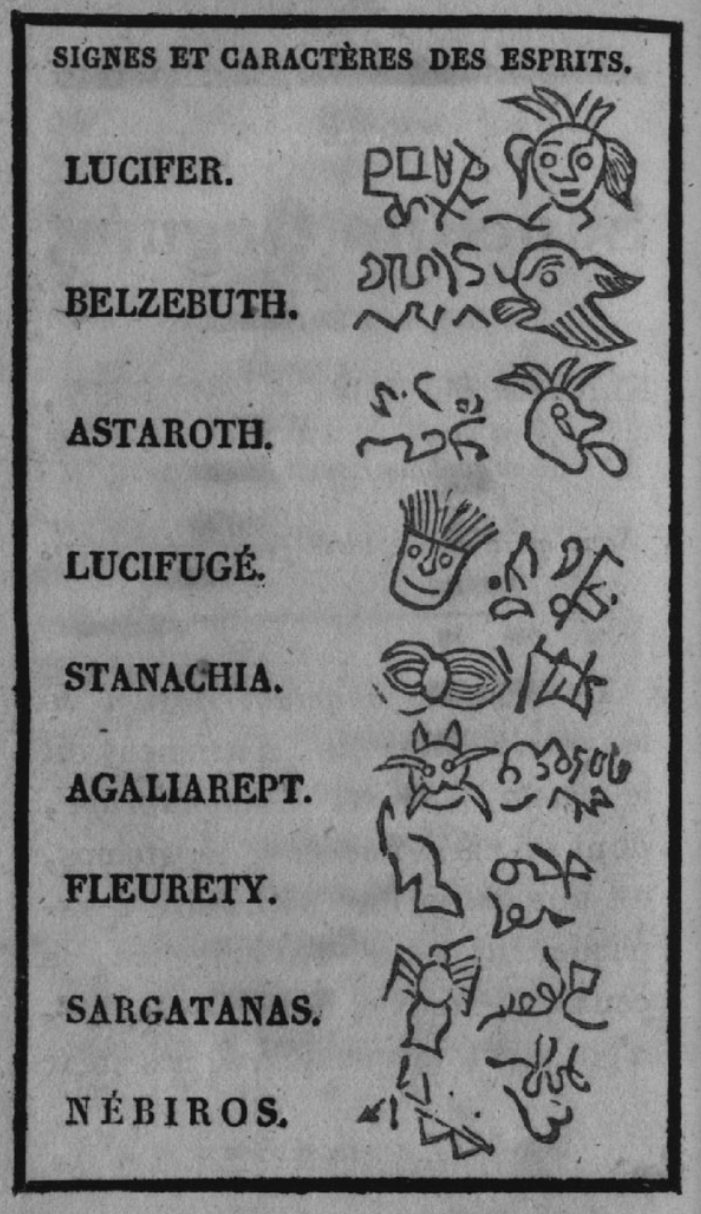
from an edition of Le Grand Grimoire.

Ancient VVisdom | The Opposition
Like a god, a devil in man
I am the opposition
this is my voice inside your head
hellish fiend under your bed
I’m the one without a religion
the infernal, the unknown
I am the one they call the AntiChrist
a pagan heathen of the nightHail to thee Lord Lucifer
I sing praises to thee
and I suffer no longer
Hail to thee God of the Underworld
I see praises for thee
and I suffer no more
So, this is a subject I’ve been wanting to talk about for a while but it keeps not happening for some reason. That said, I think this is hands down THE most important skill you can have when dealing with paganism, polytheism, magic, witchcraft, or anything else that involves woo. It’s also extremely handy in muggle matters, too. We often hear about its importance, but we rarely get much more than that. I’m going to attempt to talk about what discernment is, why it’s important, and might even succeed in coming up with a couple ways to hone it.
I deny the tyrant above. I deny his sycophant son. I deny the holy ghost. I deny the archangels and the virgin mother. They have no power over me.
I believe in the cause of the fallen angels. I believe in the Serpent of Eden. I believe in the Kingdom that is below. I believe in the God within me.
By virtue of the forbidden fruit, I am free. I am a sovereign soul on the path to divinity. Knowingly and of my own volition, I chose to walk this path with thee, O Satan.
Morning Star, be thou my light. Lord of this world, make my Lord of mine. Raise me up, and I will stand by thee.
Be it so!
I deny the Creator of Heaven and earth. I deny my Baptism. I deny the worship I formerly paid to God. I cleave to thee, and in thee I believe.
Compedium Maleficarum
So yes here’s a simple script for an oath to Satan, allegedly based on what “witches” said.
How art thou fallen from heaven, O Lucifer, morning star, son of the dawn!
How art thou cut down to the ground, which didst weaken the nations!
For thou hast said in your heart: I will ascend into heaven, I will exalt my throne above the stars of God:
I will sit also enthroned on the mount of the congregation, on the utmost heights of Mount Zaphon: I will ascend above the heights of the clouds; I will make myself like the Most High.
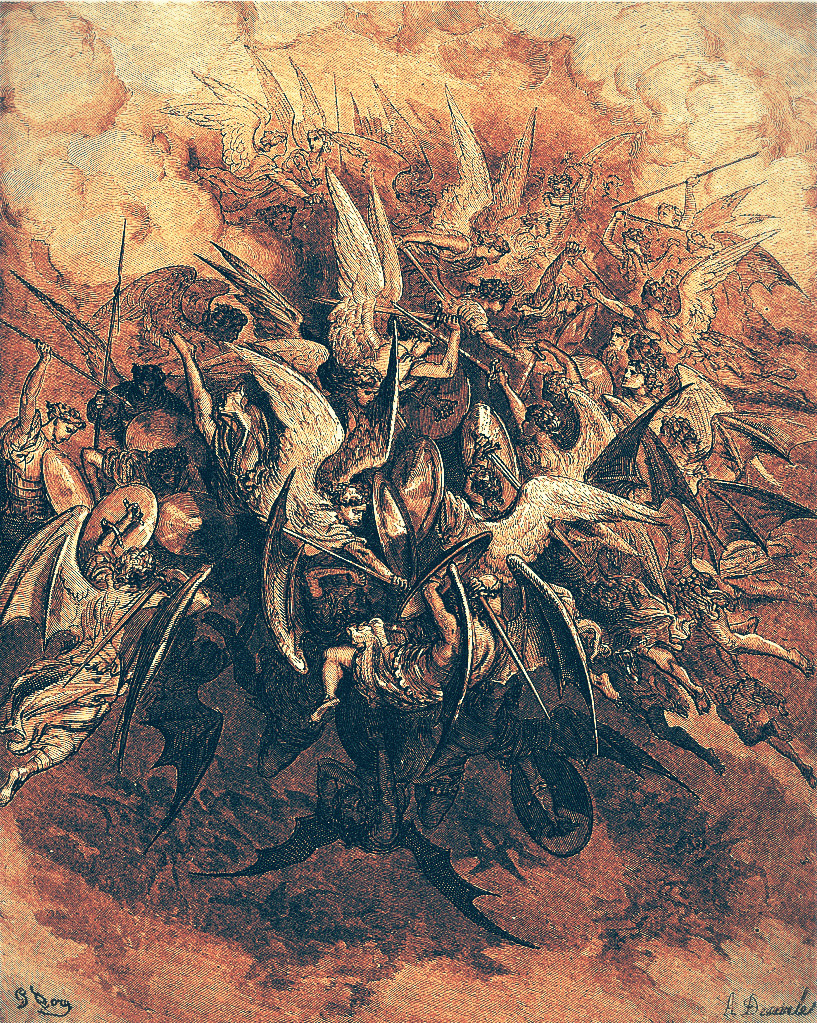
Yet thou shalt be brought down to the realm of the dead, to the depths of the pit. —Isaiah 14:12-15War in heaven. Gustave Doré. Illustration for John Milton’s Paradise Lost ~ 1866
“What if we read the story of Adam and Eve with different eyes? What if we stop reading it through the lens of popular assumption and allow it to speak in a different way? What if it isn’t an account of punishment for one monumental mistake, but a fable-like wisdom story about humans graduating, evolving from the relatively uncomplicated existence of animal innocence to the messy experience of moral responsibility? What if Adam and Eve didn’t fall? What if they were pushed? What if the voice of God in the story is a poignant warning about what lies ahead for a more highly evolved species than a straight-faced prohibition? What, in short, if we read the story with irony instead of literalism, with a grin rather a grimace, as wisdom instead of dogma?Hard work, sexual intimacy, parenthood, a sense of mortality, the knowledge of good and evil – these are the sort of things that make humans different to other creatures in a positive way. They present challenges and demands, and bring anxieties, but they are also the ultimate source of imagination, creativity, rewarding struggle and achievement. In order for humans to be human, the fruit had to be eaten…Thus the story of Eden is not about paradise lost, but about paradise outgrown.”
— Dave Tomlinson, The Bad Christian’s Manifesto: Reinventing God


 Church of the Morningstar