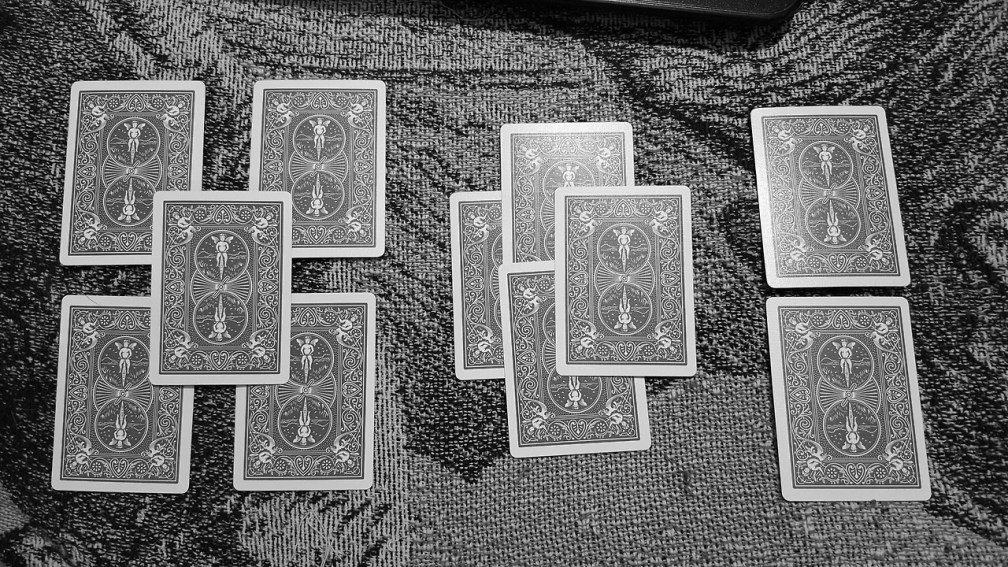
I’ve made a deck interview & spread~! 😀 (Tarot and cartomancy friendly!)
I would say this is a fairly comprehensive spread, I hope it works well for you! Please feel free to tag me if you use it, I’d love to see! ^^
These 5 are about the deck itself:
1. What is your most prominent characteristic? 2. What are your strengths? 3. What do like doing the most? (We don’t always like what we’re best at) 4. What are your weaknesses? 5. What do you least like to do? (Again, not always the same)
These ones focus more on you:
6. How do you feel about me? (It pays to be blunt sometimes) 7. What do you think I need to learn? 8. How can I work to achieve that? 9. What is the one thing you would ask of me?
These last ones are all about you and the deck:
10. What is the potential outcome of our relationship? 11. Do you want to work with me? (Personally I think this is the most important one of them all)
Don’t be afraid to ask for clarification if an answer confuses you! I had to do this a couple times myself, but I didn’t save the cards out, I just noted them down and put them back in the deck.
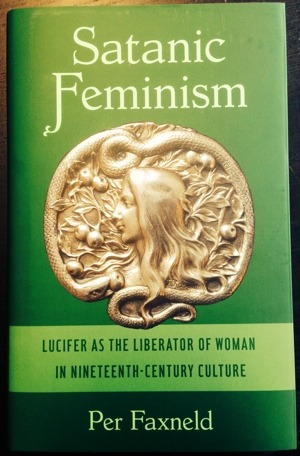
According to the Bible, Eve was the first to heed Satan’s advice to eat of the forbidden fruit. The notion of woman as the Devil’s accomplice is prominent throughout the history of Christianity. During the nineteenth century, rebellious females performed counter-readings of this misogynist tradition. Hereby, Lucifer was reconceptualised as a feminist liberator of womankind, and Eve became a heroine. In these reimaginings, Satan is an ally in the struggle against a patriarchy supported by God the Father and his male priests.
This study delineates how such Satanic feminism is expressed in a number of nineteenth-century esoteric works, literary texts, autobiographies, pamphlets and journals, newspaper articles, paintings, sculptures and even artefacts of consumer culture such as jewellery. We encounter figures like the suffragette Elizabeth Cady Stanton, gender-bending Theosophist H. P. Blavatsky, author and diplomat wife Aino Kallas, actress Sarah Bernhardt, anti-clerical witch enthusiast Matilda Joslyn Gage, decadent marchioness Luisa Casati, and the Luciferian lesbian poetess Renée Vivien.
This post is difficult for me to write because I struggle to put it all into words concisely and in a fashion understandable to people besides me. Nevertheless, I’m giving it a go.
I’m here to talk about signatures in magick and witchcraft. No, I’m not talking about an “auric energy signature” or anything like that. I’m talking about anything (and literally anything) that a person does in order to make their identity known to the forces they’re working with. There are a lot of ways to do this, which will be discussed shortly, but first, I’ll explain why I feel it’s a good thing to include in your rituals and other workings.
The spirit world, or whatever one wants to call it, functions very differently than the physical world, but there are commonalities, and one of these concerns how you are perceived.
The fact is, if the spirits or forces you’re dealing with, however impersonal, have no idea who you are, it’s quite unlikely that they’ll be willing to help you. Just like in the physical world. This is why it bothers me when I read beginner witch books that give ten different example spells, all invoking a different Godform.
To make any of them work properly, the witch would need to at least develop an acquaintanceship with the Godform in question. Even then, it wouldn’t work as well as it would if he or she had an actual relationship to the Godform. There’s also the issue of authority and reputation. Everyone must be aware that it’s possible to anger a spirit, or to inspire indifference. I’m not saying that you have to seem extremely powerful in the traditional sense to forge such relationships, only that you have to be open to them and willing to work for it.
So, lets say you’ve done this, and have a sort of reputation. That’s great, and it will improve your magick exponentially. The thing is, though, the spirit world is a confusing place. Things can get lost in the shuffle with various entities. How are they going to know what’s yours and coming from you? This isn’t true so much with Godforms you’re very close to, but can happen with other beings.
A way to get around this, and enhance your magick, is to sign your work. Many magicians and witches already do this, but they may not think of it this way or realize why it helps. Plenty of us have personal sigils we’ve developed that we might use in our grimoires, books of shadows, or magical diary. This is useful, but it’s doubly useful to somehow work it into every spell or working you do.
There are various ways to do this, which go well-beyond the tried and true personal sigil. They can be tailored to the type of magick you usually do. I practice a lot of herbal magick, so I use a particular herb (well, actually a flower) to do this – I add a small, almost homeopathic amount of it to every preparation, potion, or mixture I create for myself. I don’t do it when I’m doing things for other people, but using it for myself in this way has worked excellently. What flower is it? I’d rather not say. It probably helps that I had a pre-developed connection with said flower for many years, but there’s no reason a beginner witch couldn’t do the same thing.
So, beyond plants and sigils, how could this be done? Here’s some ideas I’ve brainstormed!
If you’re musically inclined, you could use a few notes for your signature, and hum or sing them at crucial points during your work.
Song lyrics and poetry may work, too, but it’d probably be best to keep it short and easy to remember.
A particular Tarot card from a particular deck, physically used or simply visualized with great intensity.
A work of art, again, used or visualized.
A completely ordinary object, such as a pen, or something from nature. Be careful not to lose it!
Just some ideas. I hope you liked this post, and that it made sense to you. I’m about to announce my third giveaway, and my personal deadline for doing so is tomorrow night, but hopefully I’ll have it up tonight!