That feel when you try to “save as draft” but accidentally hit “post.”
That’s what happened with my “School” post. Sorry, followers.

That feel when you try to “save as draft” but accidentally hit “post.”
That’s what happened with my “School” post. Sorry, followers.
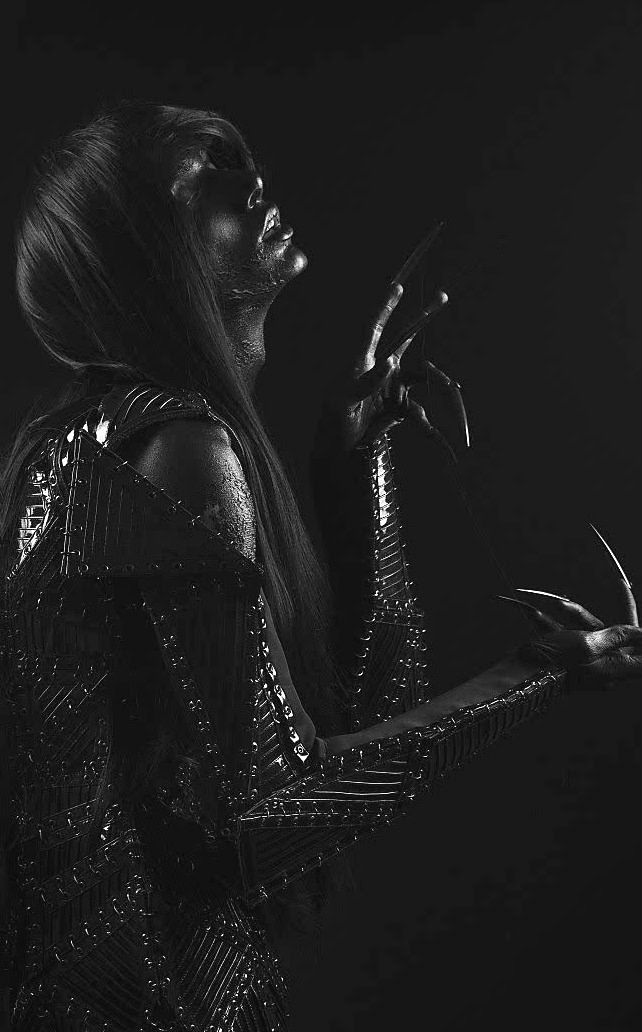
That Angel who was brave enough to buy his independence at the price of eternal suffering and torture; beautiful enough to have adored himself in full divine light; strong enough to still reign in darkness amidst agony, and to have made himself a throne out of his inextinguishable pyre.
History of Magic, Éliphas Lévi
or, when you try to show that “the Satan of the Republican and heretical Milton”, “the fake Lucifer of the hetorodox legend” sucks but utterly, epically, terribly fail.
(via vohugaona)
A moment of patience in a moment of anger prevents a thousand moments of regret.
(via minuty)
This is the first in a series of posts about the so-called “Seven Deadly Sins” and ways to subvert them.
One lesson I have learned is that every so-called “virtue” has a dark side, and nearly every “sin” has its positive power. These journals are part of my shadow work.
So: Pride. Pride is often called the greatest and most terrible of the Seven Deadly Sins. Some think of it as the sin from which all other sins flow. It’s also the sin most frequently associated with Lucifer, who tried to set himself above Yahweh.
I think we all know the ways in which Pride can be a negative quality. It can make you an obnoxious braggart or insufferable snob. Hurt Pride can lead to holding an implacable grudge, or to stubborn refusal to admit when you are wrong. Pride can be an inflated sense of self-worth that stops growth, or a source of ludicrous perfectionism that tortures your soul and drives everyone around you crazy.
Pride can be many different things, however– and the above are just a few of the most familiar.
I think Pride gets a bad rap in society.
The most obvious example I can think of for people who could use a little more Pride is young women. Girls and women are desired and objectified in this world, and are expected to make themselves look as good as possible. Yet, at the same time, they are forbidden to notice when someone is “admiring” them, even if that so-called “admiration” is deeply creepy and a possible sign of danger. They must not take too many selfies. They must deflect all compliments. They must spend money, time and energy on “looking good,” but they must never be seen noticing the fruits of their efforts, because to do so would be “vain.” Talk about alienated labor! To work endlessly on your own face, body and wardrobe in service of some ideal of perfection, and never even be allowed to admire the fruits of your efforts!
Of course, the self-effacing practices society mandates for girls and women go far beyond the realm of physical appearance. In general, everything women and girls do is supposed to appear effortless and never, ever be self-congratulatory.
Smarter than your male peers at school? Play dumb, never admit it. Hide your test scores.
More competent than your male-coworkers? Stand back and let them take all the credit for your work. Watch them promoted over your head. Earn seventy cents to their dollar.
Are you a home-maker? Just go ahead and pretend that cleaning the house and raising the kids is no trouble at all; in fact, laugh at the idea that your stressful 24/7 job where you are always on call is any kind of work at all, much less work that might deserve, I dunno, A GOVERNMENT STIPEND or something. Let everyone else tell you your life is easy, because you don’t have to “work.” Laugh along at jokes about “bored housewives.”
Trans woman? Be even more self-effacing in everything you do so that maybe no one will fucking kill you. Cis woman who wants to have children? Pretend that pregnancy and childbirth is no biggie, and definitely hide all the “gross” and “scary” parts of it from the world.
Above all– apologize way too much. Make your voice quieter and softer than all the others in the room. Every time you speak up, start by saying “sorry.” Make sure to always apologize for the inconvenience of your existence.
So there’s just one situation in which the specter of “Pride” is being used to keep people under control. I love it when I see women pushing back against this– whether it’s swaggering, cocky lyrics from a pop diva or a 15-year-old girl flooding instagram with her selfies, and tagging them with those same self-confident lyrics.
Other marginalized groups have similar struggles with Pride. In America, people of color, immigrants and children of diaspora may struggle with assimilation versus retention of culture. Any kind of Pride they have in their appearances, their cultures, their histories, their religions, etc. will be read as refusal to “fit in,” as being “Un-American.” (This sort of thing happens in many places in the world but I am only really familiar with the American nuances.)
White society is horribly threatened by expressions of “Black Pride,” “Black Power,” and even by the self-evident phrase “Black Lives Matter!” Say “Black girls are beautiful” and some shithead will just have to say “All girls are beautiful!” It’s a fucking non-sequitur, as if somebody had said “the sky is blue” and someone else had furiously shouted “So is the ocean!”
“Good” POC, according to white supremacist society, are those who don’t make waves, who don’t make white people uncomfortable by talking about either their identities or the oppression they experience for them, who survive by ignoring everything that makes them “different.” Who, in short, don’t have Pride… or who hide it.
Gay Pride is a good, familiar example of Pride being subverted from deadly sin to liberatory principle.
I could give many more examples. At this point I think we can plainly see why the Medieval Church, invested in keeping the peasant population under control, might have named Pride as the worst of sins. Crush someone’s Pride, and you crush their power. You make them small and manageable.
The truth is that Pride can be a virtue and a source of strength.
Pride can liberate, illuminate, and nourish.
Pride can be the rejection of shame. Pride can be gratitude and appreciation for one’s beauty, talents, culture, identity, self. Pride can be the refusal to be made smaller than you are, to be quashed down, to have your light extinguished.
Pride can motivate positive growth, can push us to be the better selves that we so love and admire.
Pride can be a realistic awareness of your assets and a willingness to deploy them in life.
Pride can be recognizing that you are OK, that you are valuable and good just as you are.
Pride can be loving yourself– and demanding to be loved.
So ask yourself:
So, a contrary view to my post yesterday (because I am literally a Devil’s Advocate, haha):
Skepticism is not that helpful when you’re actually doing magic. I mean, you want to use discernment, but sitting there doubting that magic is real at all will get you a self-fulfilling lack of results. At least, in my experience, and in most magic philosophies I have encountered. In other words, magical thinking really is magical.
Skepticism can’t give me the inner reserve of emotional strength that faith can. Feeling the presence of Lucifer, and even more importantly of my Inner Power, can keep me going in even the hardest of situations.
It might be right and helpful to doubt Lucifer at times, but there is no good reason to ever doubt myself. Sure, when I fail to call upon my Inner Power I can be weak, malicious, impulsive, and make bad choices. But when I keep in close contact with it, I have been astounded at how much braver, more patient, and compassionate I can be. Calling upon my own better nature has kept me sober for five plus years. It has allowed me to do things that terrify me. It has helped me be kind and restrained with even the most difficult people, a thing which, since I work in customer service, is very much to my benefit on a daily basis. Best of all, it has allowed me to heal relationships I thought I had completely destroyed during my addiction.
I guess it’s possible to look at my Inner Power from an agnostic or even atheistic perspective. From that perspective, prayer and meditation are merely useful tools, tricks of the mind that for some reason allow me to access parts of myself that I can’t get at through pure logic or conscious thought.
But honestly, prayer and meditation, like magic, may not be the best places for skepticism. For this “trick of the mind” to really work, it may be helpful to imagine a spiritual dimension, whether that’s real or not.
So I am torn, essentially, between the skeptical instinct to find “what is true” and the spiritual/practical drive to find “what works anyway, true or not.” And being torn is probably good, as long as it keeps me growing rather than in stasis.
Also also also: in The Luminous Stone (which I have been citing way too frequently but hey, it’s the first and so far only book I actually have read which is entirely devoted to Lucifer as a deity), I encountered the idea that Luciferian revelation and gnosis is maybe NOT confined to the rational. Luciferian gnosis is not purely Apollonian, but also Dionysian, in other words. (Hell, I am pretty sure Apollo is not purely Apollonian in that sense, I mean, what’s all that stuff about the Oracle got to do with pure rationality?) I think that’s a very powerful idea to keep in mind.
I really don’t want to get mired down in some dry, academic, empiricist approach to knowledge. I already know, from many personal experiences, that gut instinct and intuition can give me really important information that my conscious mind has not figured out yet. I’m talking about life-saving information, actually. I think it would be really dangerously stupid to discard truths that come from seemingly “irrational” sources, just as stupid as it would be to throw rationality out entirely.
As hilariously paradoxical as this is (I’m a Luciferian, I’m used to paradox), I want to ask Lucifer, if he is real and if he is there, to guide my skepticism. Help me dose it properly. Help me with discernment.
Rudolph Steiner, that fucker, would say I am torn between Luciferic mystical impulses and Arimahnic materialistic ones, and that I need Christ to mediate between the two. I think he’s got that trinity all mixed up, but nevermind. (Dammit, I am gonna have to write a post on anthroposophy soon, aren’t I?)
I seek a Luciferian blend of spirituality with rationality (and sensuality). I want to blend the doubt and curiosity of Eve with the rational/sexual/spiritual revelation and apotheosis she gained by eating the apple. (Another note to self– write a piece analyzing Genesis 3.)
May the path never get easier. May every revelation contain the seeds of its own debunking. May all of it always serve me well.
I don’t know how I’ve gone this long without stumbling into the band Ghost but i came across it in my “watch later” tag and I really wasn’t expecting a video with over 6m views to be
- so clearly about Lucifer
- from a Luciferian/Satanic perspective
- portrayed in such an upbeat and wholesome way
like just fuck me up why don’t you
Oh honey get ready for all the feels ❤
I still remember the first time I heard CiriceI listened to it for the first time last night and the line “I can feel the thunder that’s breaking in your heart,” was the only thing in my head when I woke up today.
I’m already on a feeltrip and I didn’t pack a lunch
OK, I just had the same experience due to this post of “I guess I have to listen to Ghost now”
Holy shit, this is the metal I have been longing for– clean vocals and blatantly Luciferian lyrics and wicked hooks. Thank you!
It’s healthy. It’s natural. It’s good.
Maybe while you’re in the midst of a spell, try to keep it at bay. (This will help you get the best results.) But question things.
Not everything is a sign.
Not everything is a curse.
Test things out.
Experiment.
All of this is important.
Being critical of things does not make you a bad witch.