


Skepticism Must Cut Both Ways
I haven’t made a long text post in awhile. This is because my life has been crazy– particularly my magical/spiritual/religious life. I’ve wanted to share about it, but have been too raw, and haven’t known where to start.
So I’ll start here, with an important lesson I’ve learned.
If you want to dabble in magic but have a healthy skepticism about whether this is all “real,” that’s fine. That was me for a long time. But there are dangers to this attitude, and I am here to give you a warning about it.
True skepticism is open-mindedness. Think about how good science is actually done: you have a hypothesis, but you don’t wanna be too married to it because it will skew your interpretation of results. And if your hypothesis is wrong, you have to be ready to throw it out.
If your hypothesis is “magic isn’t real,” magical experiments may prove you wrong. You ready for that?
I’ve done some things not truly expecting them to work, or not expecting them to work very well, because I still felt foolish and thought I was probably kidding myself about any of this stuff being real.
The problem with that is… what if it works?
Are you ready for it to fucking work?
If you go into a spell or ritual with too much skepticism, that means you may not be mentally and emotionally prepared for it to have real, powerful consequences. Even sending out a prayer that you don’t truly expect to be answered can have this effect.
And if you’re too cynical about results, you likely haven’t thought through all the potential repercussions, and that can be devastating.
For example, I prayed for Lucifer to destroy all of my illusions. Yep, all of them. I’m an idiot.
Just a couple weeks later I have quit a job I loved, and broken up with my boyfriend who I also love to pieces, because I became incapable of ignoring the ways in which those lovely things in my life weren’t healthy for me anymore. How much more in my life is based on beloved illusions? I may be about to find out, even though I feel like I’ve already lost pretty much everything I have.
Are you ready for something like that?
Related, I did that Black Baptism in May. I did it in the spirit of occult experimentation, basically customizing a supposed Satanic Witch Initiation I found in Compendium Malleficarum. I had no idea if there was anything to it, given that there was a good chance it was just based on false confessions extracted under torture. So I decided to jump on that grenade– try it, and see if it worked.
I still admire that reckless, fly-by-the-seat-of-my-pants spirit of experimentation that I had going into the ritual, and I don’t regret self-initiating and giving oath to Satan. However…
…did you know that initiation involves spiritual death?
Yeah, spiritual death. Hard to describe if you have never been through it. Feels about as painful as it sounds. Imagine shedding parts of your identity that don’t serve you anymore like so much dry skin. Imagine suddenly becoming a completely different person, and realizing you need completely different things than you thought.
Then imagine how painful that process can be for all the people around you.
If your identity died and you were reborn as something new, would your old life be set up for that new person? Chances are, you just can’t know the answer to that until it happens. We don’t get to pick what we are reborn as.
If I sound naive, chaotic and disorganized, it’s because I honestly am. I’ve been at this for a couple of years and have done a lot of reading, but I am not and never have been part of any structured magical tradition. The Devil is my initiator and he doesn’t always play nice. He also knows the only way I tend to learn is “the hard way.” I signed up to be repeatedly astrally gut-punched by Lucifer, and I knew he didn’t pull his punches, but intellectually knowing that and actually finding out how hard Satan can hit you are different things.
So I am begging you, dear skeptics and cynics who like to do magic to see if it will work (but kinda don’t expect it to):
Be ready for it to go either way. Maybe nothing will happen. Maybe ALL THE THINGS WILL HAPPEN. You’ve got to be prepared.
And uh, please don’t try my Black Baptism ritual, or any other initiation rite, until you’re sure you’re ready. It might change your life. It might change you. And it won’t necessarily start changing you right away, or change you in the ways you expect. When I did the ritual itself, I had a lot of powerful emotions, but I didn’t have any flashy visions, or hear the voice of Satan, or feel him touch me to leave a Devil’s mark. I thought maybe it had been nice and personally cathartic, but not magically effective. I was wrong. The Devil’s Mark is on me now, and I am still figuring out what that means.
I love you all. Hail Lucifer and also Thanks Lucifer, You Absolute Motherfucker.
“so what do death witches do?”
good question!
before i jump in, i wanna emphasize that there’s no right or wrong way to do death work. i know i’ve struggled for a long time with the idea that i’m not “witchy enough” or don’t spend enough time with the craft, so don’t take this as any sort of shaming of your practice or the time you spend with it! this is just what works for me.
that said…
we do a lot of things!
- ancestor work
- spirit communication
- divination
- comforting the living left behind
- attending to the dead, emotionally or physically (as in mortuary workers)
- work with cycles of change
- healing
- shadow work
- lots more!!!
if you’re interested in anything specific that i listed, let me know and i’ll work on a separate post about it!
here’s a rundown of how i incorporate these things into my life:
ancestor work is my primary practice. i honor long-gone ancestors, but also close relatives who have died. “honor” can look very different for many people, as can “work,” but i do things like tend to my grandparents’ grave, talk to my ancestors about what’s going on in the world they’ve left behind, and petition them for favors.
to attend to the dead, i tend other graves in the cemetery.
this story is of those moments where i’m like “wow, willow, how did you not know you were a witch” – when i was first driving and spent a lot of time with my grandparents’ grave (moment 1), i had a strong affection for another grave of someone unrelated to me and would regularly tend to it and place flowers on it, despite not knowing them, because it was regularly unattended and i felt that he deserved the comfort of being cared for (moment 2).
other death witches attend to the dead by working in mortuary sciences!! a great book on this topic is Smoke Gets In Your Eyes, by Caitlin Doughty, about facing her fear of death by working in a crematorium.
now, shadow work is one of my favorite topics. essentially, you work with the darkest parts of yourself to integrate yourself as a whole person by facing what you fear about yourself. this can be done through divination but also with self-reflection, journaling, and mindfulness.
divination itself is one of the oldest ways i’ve practiced witchcraft. i’ve been reading the tarot cards for 10 years now and also dabble in pendulums, oracles, shufflemancy, osteomancy, curio casting, and tons of other forms. in death work, divination can be a form of spirit communication, where you speak to spirits of the dead or other types of spirits, or it can be fortune-telling, self-reflection, and many other things.
some people think healing is strictly the place of green witches or light workers, but you can’t have light without shadow. for example, many witches think of Hades as just a “death deity,” without recognizing how He can be a healing force by helping us reckon with our fear of death and knowing when it’s our time. it’s also working with the cycles of change.
other cycles of change include observing the wheel of the year, or my personal take, observing the local changes of season. i have my own associations and my own calendar related to the midwest climate, but practicing the wheel of the year is an excellent way to tap into general seasonal shifts and have a community to help!
finally, comforting the living left behind is one that many people practice without realizing it’s a form of death magic. not only are you honoring the deceased by helping their loved ones, but you’re helping create change, or death of the old, within the living.
i hope this helps any budding death witches! ✿◕ ‿ ◕✿

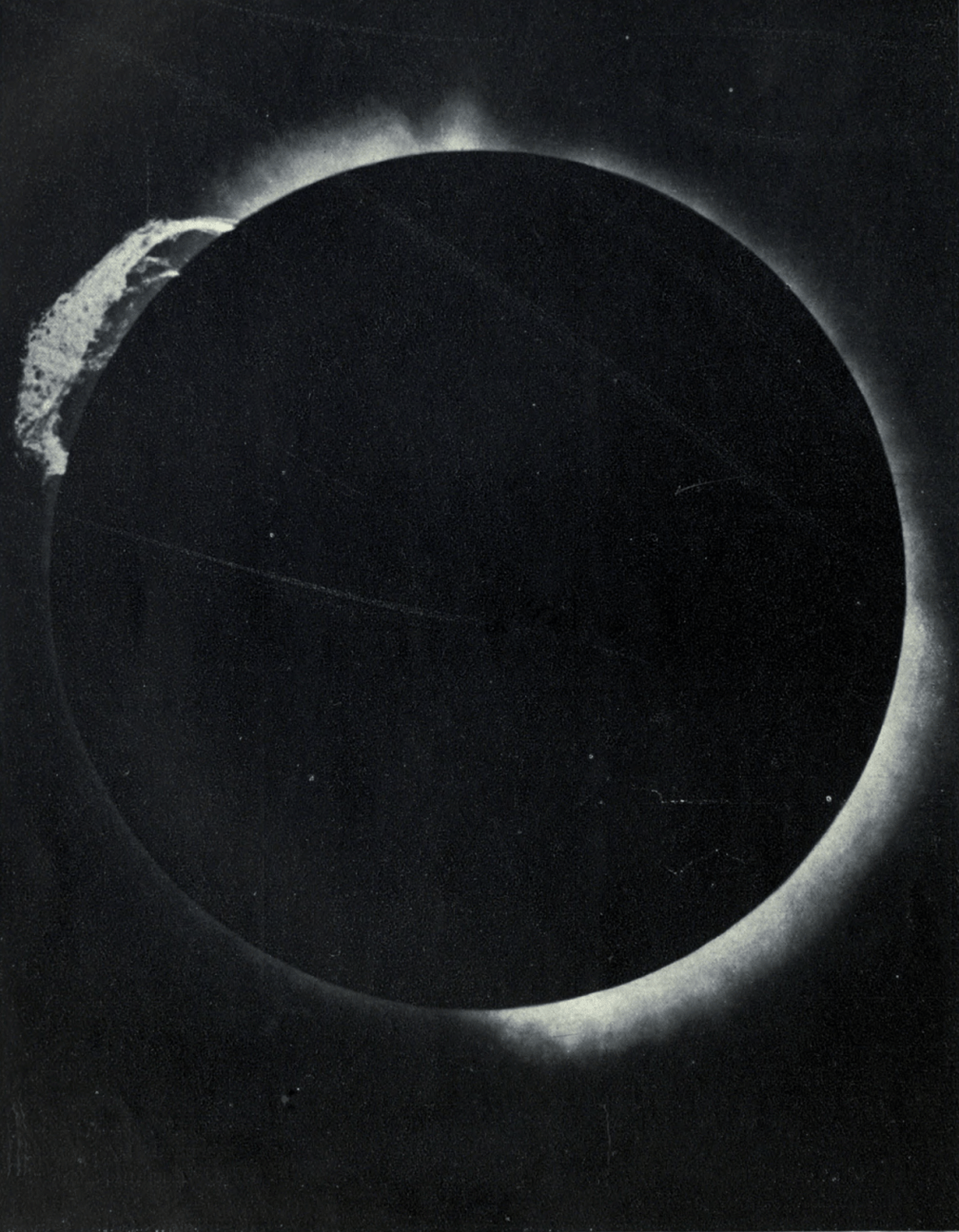
“Total solar eclipse (photographed) by observers from Greenwich Observatory.” Published in Hutchinson’s Splendour of the heavens; a popular authoritative astronomy. 1923 / src
Types of Satanism
Before we begin, I lied. Many of these aren’t technically Satanism,
but are put in the same group by those outside of the community.
Satanism itself is the term for following the philosophy of Satan. This
would include institutions like LaVeyan Satanism, Rational Satanism, and
so on. The worship of Satan and taking that to heart would definitely
be a lifestyle, and there’s a lot of philosophy that goes with that, but
the word “Satanism” does not denote theism. A better term that includes
all of the following types would be “Diabolism,” as that’s suitably
eclectic without losing sight of the main focus being on devils. This
also doesn’t exclude Lilith from the craft, who is equally important as
Satan. Nonetheless, I’m currently unaware of books on the philosophy of
Lilith that aren’t just written by edgy feminists, nor a term denoting said philosophy. Perhaps Lilim? Lilist? Lilituism? Lillithosophy? I do think that a
blend of most of the following practices is the best step forward for any diabolist, as no single one could be seen to hold all of the possibilities of the path. Nor would you want them to, it would prevent them from specializing in what each one does best.Evilism (aka Sicko Satanism):
What
it is: This is what most people think of when they think of “Satanism.”
Depraved individuals who worship the devil as the God of Evil. They’re a
fringe group and almost always solitary practitioners. Oftentimes
they’re recent converts from fundamentalist Christianity or Catholicism,
or else they use the label of “Satanist” in order to shock others.
There are some noteworthy examples of evilists, but it’s a position
mostly viewed with derision and disgust by other Satanists. It’s by far
the least common version of Satanism, and in my opinion the second most
misguided.Narcosatanism (aka Criminal Satanism):
What it is: The highly eclectic variations of Satanism found among criminal organizations, such as gangs. It earned its name from the caravans of Mexico, where a permutation of Mexican death cults and African tradition formed the basis of rituals that involved a lot of potent spiritual warfare. They have been known to butcher bodies in complex necromantic rites in their fight to control the flow of drugs. The term could also apply to many gangs that take on the imagery of Satanism, often with their own traditions behind it closely associated with organized crime, such as prostituting yourself to the devil to initiate into the gang.Folk Satanism:
In many places that were once deeply spiritual, but had their traditions and practices called Satanic by invading Catholics, one can still find the descendants of earlier practices that have long embraced their Satanic and “evil” nature. This can manifest in a wide variety of ways, the aforementioned narcosatanists are just one of them. These practices are too eclectic to cover in detail here, and work too closely with too many cultures for me to have any confidence in presenting them with any accuracy. I will say that the ways the evil nature of Satan is interpreted by these outlets are very interesting. Some view Satan as stern, but misunderstood. Others view Satan as overseeing rebellion or crime, and thus is less of an evil god and more of an adversarial one. Others truly view Satan as evil, only to be worked with if all you care is short-term material gain at the sacrifice of your soul and the willingness to commit great atrocities. It’s at the very least worth looking into.Ditheistic Satanism (pejoratively referred to as reverse Christianity):
What
it is: Satanists that believe there are two gods, Yahweh and Satan, and
their cosmic battle has enveloped and defined the universe. They’re two
sides of the same coin and either the only real entities or the only
powerful entities that matter. Satan here is viewed as a mastermind
tactician, making spiritual warriors out of those who convert to His
side. Elements of this are used in a lot of decent paths.Atheistic Satanism:
What
it is: Atheists who see Satan as a symbol of antichristian attitudes
and intellectualism, who hide behind the symbol of Satan as an excuse to
do what they were going to do anyway. These are normally people who are
wholly incapable of magick, and thus proclaim it doesn’t exist,
although sometimes they will subscribe to a very limited psychological
view of magick. It’s one of the most common forms of Satanism, and in my
opinion the most misguided.LaVeyan Satanism:
What it
is: Belief in Satan as a symbol of freedom and the True Self, an
aesthetic of darkness and a devotion to the individual. It posits that
mankind is beast-like by nature, and that this isn’t always a bad thing,
and is deeply opposed to hypocrisy and mindless dogmatism. LaVeyans
hold indulgence of personal pleasure, so long as it’s not directly
physically or psychologically harmful to an unconsenting other, to be of
high importance in finding the Self. It’s so opposed to the concept of
dogma, that Anton LaVey (despite believing in a devil theistically for
much of his life) wrote against the existence of gods as a whole because
he found their presence in philosophical texts unnecessary and lending
the text to too much possible abuse. Later on, he converted to full
atheism, much to the disgust of his peers. In his prime, he would find
the aforementioned Atheistic Satanists to be quite the contemptible lot.Setianism:
What
it is: The syncreticism of Satan with Set. They are Kemetics who follow
Left-Hand Path philosophy and belong to the black lodge, and they view
Satan as an impure manifestation of Set. Those peers LaVey disgusted?
This is the foundation they formed. Given the Church of Satan’s bad PR,
one might be tempted to say that the Temple of Set’s attempts to
legitimize Satanism in older practices and shed the name of the
“Christian god of evil” was to avoid the same controversy. Regardless,
Ancient Egyptian texts and beliefs are central to the Setian concept of
Xeper, and many more of their teachings. To call oneself a Setian, you
are to initiate in the Temple of Set. For this reason, there are plenty
of Setians who disagree with the founding philosophy of the Temple, as
the Temple has almost no dogma that it forces its members adhere to.Pagan Satanism (aka Satanic Wichcraft or Sabbatic Satanism):
What
it is: A form of polytheistic Satanism that integrates the
reconstruction of Satanic practices common throughout the middle ages,
often drawing upon the pagan deities that were subsequently demonized.
Frequent use of Germanic (and general Indo-European) folk magick defines this path, as well as research into confessions of Satanism made under torture. It’s unclear how much of this material was truly Satanic, although it’s most likely at least some of it was, but the intent is normally to lift what could be used from these practices rather than discern what was used. Anton LaVey is a notable member of this branch. This can also include Wiccan practices with intentionally Satanic
imagery. OFS Demonolatry could be seen as Pagan Satanism, though I would
argue this is incorrect as there’s no element of reconstruction and is
instead a supposed direct line of tradition. Satanic Wichcraft also
often incorporates elements of eclectic necromancy, given how the two
were seen as closely linked in the middle ages, although the Satanic
Witches who do so almost always view the two practices as separate.
There are exceptions, of course, like the cults of Qayin, though they
aren’t necessarily Pagan Satanists either.Anticosmic Satanism (aka Chaosophy):
What
it is: A deeply ceremonial form of Satanism that draws upon Gnosticism
and Kabbalah to form its own darker alternative to Rosicrucianism. It
posits that demons are the gods of an antinomian force of chaotic
darkness that is dead set on destroying the limitations of our world.
They often work with the Qliphoth, and they view demons as having an
ultimate goal of peace and freedom that can only be brought about
through the dissolution of what prevents peace and freedom from
reigning. This can, sometimes, be through terrifying and destructive
methods. Unlike Christianity, however, the plan is clear and all of
these methods tend to make sense in context without the need for “God
works in mysterious ways” or “have faith in God’s plan.”Demonolatry:
What
it is: The worship of demons. Technically, that’s all it is. Normally
this involves the belief that demons are gods, though not always.OFS Demonolatry:
What
it is: What most people mean when they say “demonolatry.” It’s a family
practice that supposedly dates back to antiquity and has been handed
down through generations in tomes. Stephanie Connolly and Selinda
Dukante have taken information from this practice and helped put it out
into the world. It has its own demonic hierarchy with the 9 infernal
gods at the top, focusing on the positive attributes of demons. It’s sort of Satanism, as they view Satan as the figure at the top of their pantheon, but it also has more in common with Paganism than it does with Satanism. More than even Sabbatic Satanism, I would say.Theistic Luciferianism:
What it is: Veneration of Lucifer. This does not mean the same as the veneration of Satan. The name “Lucifer” meaning “light-bringer” and used to refer to the morning star (the planet Venus seen at sunrise) has been used for a variety of figures. This includes both Satan and Jesus. This means that some Luciferians worship the devil, some Luciferians worship one or two other gods that they view as Lucifer, some Luciferians view the devil as one of many aspects of Lucifer found throughout multiple pantheons, and so on. There are a lot of schools of thought. The biggest Luciferian order, headed by Michael W Ford, was known as the Greater Church of Lucifer before it shut down due to constant Christian vandalism. Even while it was up, the work of Ford that was meant to unify the Luciferian community ended up dividing it further instead.Atheistic Luciferianism:
What it is: Given atheistic Satanism, you would think atheistic Luciferianism would be just as bad. Nope. Atheistic Luciferians for the most part have codified rationality and civility, and teach disciplines that help adherents not only become more in-tune with themselves intellectually and philosophically but do so with maturity. Their primary focus is on the concepts of enlightenment, liberation, and power for all individuals. They pull from a lot of legitimate philosophy, like Stoicism and Epicureanism, while adding their own intelligent spin. Michael W Ford pulled a lot from this in the aforementioned attempt to unify the community.Typhonian Tradition:
What it is: A strange mixture of Crowley’s rulership over the OTO and Kenneth Grant’s own proto-chaos magick philosophies. Michael W Ford was a part of this tradition. This practice is still adhered to today, and can be found through much of Grant’s works on the subject such as Nightside of Eden.Hebdomadry:
What it is: An intimate part of the Order of the Nine Angles cosmogony. It incorporates elements of demon-worship and witchcraft, avoiding the Qliphoth and focusing instead on the “way of wyrd.”Niners (Order of the Nine Angles):
What it is: An eclectic and mostly non-hierarchical groups of Satanists, with quite a few individual practitioners. While, from what I’ve heard, they have a few decent ideas and information, I would be extremely careful around them. They have intentionally falsified ritual data so deeply that even the history behind many of their rituals is faked for dubious reasons. They advocate killing their own members for greater power, and have ties with everything from Fascism to ritual murder. Their aversion to the Qliphoth might be part of deeper antisemitism, rather than a want to keep their practice standing on its own legs. Michael W Ford was involved with them for quite some time, which is part of what made him divisive in the Luciferian community.Joy of Satan Ministries:
What it is: Mostly inexperienced practitioners trying to find anything they can on Satanism who come across JoS and continue to give it life. Their teachings are a mixture of alien conspiracy theories, fake history, bizarre equivalencies between entities, and a mixture of practices stolen from other places. Their members are levied to participate in ongoing astral warfare against angels to help free demons, and are often attacked by angels while they sleep. Like the ONA, they also have ties to Nazism. They equate Satan with Enki.Qliphothic Satanism:
What it is: Anticosmic Satanists, the Typhonians, Ditheistic Satanists, and theistic Luciferians, as well as many other solitary practitioners, have the qliphoth at the center of their practice. “Qliphoth” translates to “husks” or “shells,” as they’re filled with the void and could thus be viewed as empty. These husks serve as alternate planes of existence where demons reside, each filled with specific energies. Gamaliel is filled with sexual energy, for instance, and as such is where the succubi are found. Linking them together are the tunnels of Set. You “initiate” through each Qliphoth by opening up to their energies, which can be done in a multitude of ways. In this sense, the Qliphoth is the literal path that many Satanists have chosen to walk, with apotheosis and perfection of the Self as the reward.There are many other kinds of Satanism that I have not covered here, even great ones such as the Draconian tradition. There are also a lot of practices that claim Satan demands crime, works for anarchy or communism, or fascism or monarchy, or obedience to order, and so on. It’s an extremely eclectic practice and everyone has their own take on it. I would personally argue that demonolatry and anticosmic Satanism are the most reputable, as one is a long-standing tradition that blends well with known demonology and the other approaches the topic from a point of ceremonial high magick that already has proven itself throughout the ages. I would start with these.
This is awesome! I will say, however, the O9A and JoS are absolutely nazis, and should be avoided. But this is a great list! I would be ditheistic, then. Huh.
Not a bad list at all. I would go easier on atheistic Satanists, they can be a bit annoying but The Satanic Temple has done some good work. And I too would be harder on O9A and JoS.
I have elements of a lot of these, especially Satanic Witchcraft, Theistic Satanism/Luciferianism, Ditheistic Satanism, and Qliphotic Satanism. But there are also elements of my own practice that are developing into their own weird current, for example the emphasis on the consorts.
So I’m flirting with Luciferianism and don’t know where to start. Are Michael W. Ford’s books a good starting point? Where did you get started?
Ehh, he’s involved with the deeply fascistic Order of Nine Angles so I’d avoid him. I tend to find Genesis 3 to be an excellent starting point, and I have a podcast coming out in the near future on the subject, actually just a lot of the book of Genesis, and the Book of Enoch (Apocrypha). After that I’d reccomend books on early modern witch hunting (like the Compendium Maleficarum) and the Zohar, as well as the Treatise on the Left Emanation, the Lesser Key Of Solomon (I reccomend against using those particular rituals to summon demons as they involve a lot of binding and commanding and that generally offends them), also there’s loads of great Biblical Apocrypha out there, especially Thunder Perfect Mind. There isn’t really a good central text for a left-wing Luciferianism… or Luciferianism in general TBH aside from biblical writings, and it’s a decentralized faith without a set doctrine so it’s primarily about figuring out what Lucifer means to you and what texts you regard as authoritative.
I’m also a fan of Baudelaire’s Litanies of Satan, and Milton’s Paradise Lost, and various other literary/pop cultural/folkloric depictions of Satan. I primarily read Hermetic literature and Christian theology (including heretical) along with a lot of witchcraft literature to get an idea of the… historical depictions of Lucifer.
Welcome! I have a whole reading list page on my blog. Enjoy!
 Church of the Morningstar