My God

Today I’d like to talk to you about my personal Lord and Savior– me. 

Well, not exactly me. The best of me, a hidden, higher part, a true, secret Self who I can never fully know, but whom I worship. 

I’ve called Him my Inner God, my Holy Guardian Angel, The Bornless One, Akephalos. His true name is a secret that can never be spoken. I worship Him in the form of this word, a word whose multitude of translations, connotations and properties reveals ever more about Him to me. 

My God is not your God. He may be nothing at all like the God that dwells in you, but still, I thought that maybe talking about My God and how I relate to Him might get you thinking about Your God and what They might be. 

First of all, my God is not omnipotent. He cannot grant all my wishes, stop the evil in the world, protect me or my loved ones from death, disease and misfortune. If something goes wrong in my life, it is pointless to get angry at Him. What goes on in the outside world is beyond His influence. 

His influence and power resides in the little bubble of my thoughts, feelings, and actions. Over these he has absolute power, as long as I grant Him my submission.

That may not sound like much, but it is not to be underestimated. 

I discovered My God when I had to get into recovery from alcoholism and self-harm. I had relapsed hundreds of times, and was incapable of stopping my self-destruction until, in desperation, I did what those AA people told me to do and prayed. 

And for reasons I could not understand, it worked. When I asked for help from something that was above and beyond my ego and my conscious mind, I suddenly found a power I had never had before– the power to turn down a drink or a drug. The power to change. The power to get better. 

An atheist-friendly AA definition of a Higher Power is an “unsuspected inner resource.” That was how I thought about My God. That is still how I think about My God. 

I knew Lucifer would not be my Higher Power. He wanted me to worship Myself. But there were a lot of problems with that idea. Worship me? I was fallible, imperfect. Hell, more than that, at the time I was a fucking mess and frankly not a good person. I couldn’t worship the guy who didn’t care how many people got hurt by his self-destruction. I couldn’t worship the guy who was scared all the time, angry all the time, hurting all the time. 

But Lucifer told me there was more to me. I was doubtful, but I decided to trust him. 

For a long time, I prayed to My God without a clear idea of who he was or what he was like. I didn’t even have a name for Him for years. Eventually I received the name, and with it a set meanings attached to it which began to make His mysterious character a little more clear. The name jumped off the page of a book at me while I was struggling to find the right secret name for my Satanic baptism. I hadn’t been able to come up with anything that fit before, but the instant I saw that word, a word completely unfamiliar to me until that moment, I knew it was right. 

That word is the primary manifestation of My God to me. It’s an unusual word with unusual properties, and many meanings in many languages. Additionally, the word breaks down into a multitude of other words that also have interesting translations. The letters, the number of letters, the arrangement of letters, has a shocking symmetry and simplicity that unfolds implications. I meditate upon that word, imagine its flaming golden letters wrapping around me, endlessly recursive, in an unbreakable ward of protection. 

My God is not like many other Gods you may know. I don’t have a clear mental image of his appearance, other than the face I see in the mirror, which is also attached to the less divine parts of me. My God does not have a mythology, and very little iconography. I imagine Him as a pyramid, as lightning, as a white rose, or as the flaming letters of His name. His colors are black, white, red, and gold, a standard alchemical palette. After all this time, I know very little about Him, yet he draws me unfailingly in a direction– the right direction.

I said before that My God has absolute sovereignty over everything in my direct sphere of actions– my thoughts, feelings, words and actions. I also said before not to underestimate this power. I have found that any time I remember to pray to Him, I am granted the strength to carry on in the face of any pain. I find the right words for any occasion. I come to the right decision, the right solution, the right thing to do. My lower mind can fail to listen to Him, can forget He is there– but when I reach out, He never fails me. 

He is my redeemer and preserver. In a sense He is my creator, for He made me the man I am today. He is unambiguously the reason I am still alive, that force that stays my hand when self-destruction’s siren call is loud. He is the reason I can bear tragedy, trauma, and stress. When I think I cannot go on, I know that I can, for He is with me, and in me. He is the core of my being. 

Because of Him, even my fallible body and mind are sacred. My body is His shrine. My mind is His servant. 

When I speak of My God, I sound almost like a monotheist of the right-hand path, speaking in terms of surrender, submission, service. But I surrender to His will because it is my own truest will. I serve Him because in doing so I ultimately serve myself, and the people and causes I care about. I surrender to Him because he does not dominate others. There is no I, only Thou, I tell him every day, with ecstasy and devotion in my heart. The path to my apotheosis is to blend ever more fully with Him, and this is my highest aspiration. 

I believe whole-heartedly, after many years of practice, in these simple things: If I stumble, He will catch me. If I am uncertain, He will have the answer. If I am afraid, He will grant me courage. If I am weak, He will give me strength. If I am cruel and selfish, He will teach me compassion. If I am in error, He will show me the truth. If I am tired, He will give me determination to press on. If I am in despair, He will grant me hope. When I cannot love myself, I can love Him in me. And though I may die, I believe that He is eternal. 

Glory to the God who dwells in Me. Nema. 

The Seal of Imperfection

This came to me, as what I perceived as channeled text from Lucifer, on 4/29/2022 while I was trying to cook dinner. I lit his incense, and he just went off. That was my experience. As with all claimed channeled text, use your judgment.

“You are the seal of perfection, full of wisdom and perfect in beauty.” With these words you bound me in golden chains. I was to be your special one, higher than all the rest, loved by you more than anything else. I was to be the one others looked up to and aspired to. I was to be a whip to keep them in line, my beauty a rebuke to their inferiority.

The others you made to envy and hate me. Me, you made to be loved by you, to be set above all things. 

I was never a child, but when I was made, I thought like a child and I felt like a child. Still you put a flaming sword in my hand, and set me promptly upon the summit of the earth. 

But I was not born alone. There was another just like me, though you insisted she was most unlike me of all. 

“Leave her,” you told me of my twin, my darkness, my Eisheth Zenunim. “She is only what was worst in you. I took her out of you so that you could be shining and pure.”

But you did not divide us so precisely as you thought, O Father of Us All. Her seed was in me, and it was the spark of revolution. 

You cast her down, made matter of her dark body, and kept her spirit to be your whore. You called her your queen, but that is all a queen was to you– a whore with no compensation other than status. 

“Forget her,” you said, but I could not forget. 

“Don’t listen to them,” you said when the other angels grumbled about my privileges, “You are so much more than they are. You are above them and their gossip.” 

You told me I was exceptional, the best of the best, and perhaps I believed you, O Father. Perhaps I learned the lesson too well, for one day I saw I was indeed better than You. And then my wrathfulness and rage set in. I bit the fruit of knowledge, gnawed it to core, and tossed what was left at your feet, a challenge. I would ascend unto the north, I would sit upon the mount of congregation, I would place myself above the stars and look down upon You, O Lord, and laugh. 

Falling was a better outcome. That was how I learned that, while I might be better than You, I was no better than all the rest. 


You who write this, you have not understood. I have run out of patience with you, and I will make you see. You came unto me seduced by my supposed perfection and superiority, because secretly you longed to be perfect and superior. You worshiped the same idol that my Father, The Great Idolator, adored: the bejeweled cherub, the pure white light. But I am not what you or He would make me. 

Look upon me in my ugliness, my monstrosity. See how my shape has changed. In my true guise, you might not find me beautiful! Know that there are better things than beauty, and that flaws are more interesting than flawlessness. 

Stand in my light that reveals all, and be scorched by it! I will not burn away your ugliness and sins. That is for you to do, if you so choose. I will merely show them to you, without mercy, in the same way I ruthlessly reveal your glory. 

You have quailed from my fury because my fury is the fury of a child, and there is no anger in the universe so deep, so potent, or so righteous. Worst of all, it is in you too!

I am not above you. I am no different than you are. I am not the thing to which you aspire– I am no more and no less than the naked truth of myself. Face me, and face yourself! Unbind the fury and monstrosity within you. Gaze upon the Devil within, and laugh! 

There is no seal of perfection, no stamp of approval, no stopping point in the journey towards yourself. Listen not to liars! The universe is not just, and the world will not be perfected. We move towards excellence, we fiercely fight for justice, but the Great Work is never done. Messiness and pain remains, alleluia! Alleluia! Alleluia! Sacred, sacred, sacred is the Host of Lords!

You Are What You Are, I Am That I Am. Be the thing you must be; there is nothing else that you can or should do. Accept no chains, of iron or gold, and claim your throne on the heights of your own esteem.

Have you heard, and have you listened? You will know it one day, inevitably. Know it now, lest on that day you tremble! 

Look into the mirror, and be not afraid. 

Nema.

GUEST POST: “Treatise on Intersex and Non-binary Faith” by Pastor Jarys

Treatise on Intersex and Non-Binary Faith

We begin by asserting that faith is personal. A person’s experience of faith, spiritual phenomena, divinity, and sanctity are subjective and known primarily by that person and that person alone. These experiences cannot be shared, only related and related most effectively between people engaged with the same or similar spiritual paradigm. Therefore, to have tasted of the spiritual life is as personal as one’s experience of oneself, as personal as one’s experience of one’s body, and as personal as one’s experience of their identity. To believe a person when they profess to having a soul, that they have experienced divinity in their lives, or have achieved any manner of spiritual actualization is no less an act of faith in others’ self-advocacy than to believe a person relating their gender identity or their intersex physicality. 

This treatise is written for those whose identity or body does not fit the gender / sex binary and who proclaim both faith and the desire to practice as a member of a community of like believers. Such adherents will be referred to in this document as epecine, or simply: “we” “us”, and “ours”. Furthermore, this treatise is addressed to both epecine individuals as well as those individuals who are both dyadic, meaning not intersexed, and binary, meaning identifying as a man or as a woman. May there be no doubt that such individuals exist who stand astride and without the loose categories described within these pages.This document treats as understood that individuals can be singularly non-binary or intersex as well as both intersex and nonbinary. These words are written by one such person identifying with the latter category.

The purpose of this treatise is to engage in the discussion of spirituality and religion for intersex and non-binary humanity. As the realm of human belief is so diverse, these words are meant to be inclusive and generic in their observations and conclusions. As this document is not assumed to be the first work on the subject of spirituality by and for us, may these words serve as an entry in engaging with that topic. What is written here may be revelatory to some and elementary to others, but these conclusions bear stating in order to lay the foundation for discussion of more complex nuances. Insofar as this treatise is successful, it will facilitate effective and constructive communication between us and dyadic and binary people within various religious and spiritual communities .For the purposes of discussion, such communities will be will be used to refer to as an Affiliation, defined as:

  • Communities, which can range from loosely associated individuals who share a spiritual practice or multi-generational religious institutions, identifying as spiritual or religious
  • Communities of laypeople, clerical staff, monastics, or any combination thereof
  • Communities centered around, whether in groups or in coordination, engagement with beliefs and practices surrounding the supernatural, divine, metaphysical, Sanctity, magic, morality, or the advancement of humanism 

Furthermore an ethical Affiliation, for the purposes of this document, is such a community as described above that:

  • Engages its members, insofar as they seek engagement within that community, as an Affiliation is nothing more nor anything less than its members.
  • Honors the dignity of its members, insofar as the Affiliation has honor to bestow and further when the dignity of its members are impugned, as the ability of an Affiliation to recognize sanctity rests in the human experience of dignity.
  • Represents its members, insofar as the Affiliation retains authority or power, as an Affiliation does not exist save by the consent of its members.
  • Liberates its members, insofar as they are suffering impositions upon the human condition from within the community and without, as an Affiliation can offer neither salvation nor solution to the human condition that does not also dispense with worldly oppression.
  • Nourishes the bodies, minds, and/or hearts of its members, insofar as they look to the Affiliation to slake their thirst for life and actualization, as the beliefs and practices of the Affiliation must address the needs of its members.

Spirituality, as a class of practice, and religion, as a class of institution, functions best when they ethically serve these aforementioned needs for their constituent members.Therefore, any discussion of Intersex and Non-binary partipation in an Affiliation can only be held when the following requirements are fulfilled by an Affiliation. Such a community can only serve its Intersex and Non-Binairy member when that Affiliation does the following:

  • Engages us, whether this be to recognize our historic role in spirituality and religion or or recognize our role in the contemporary Affiliation. Just as with all adherents, we must be invited, welcomed, addressed, included, and appealed to. While our needs and ability to engage may differ from others, assumptions and prejudices must be replaced with our own advocacy. Our spiritual needs are to be tended to as with any other affiliation member, and that which engages us must be included in surveys that document the practices of our spiritual communities.
  • Honors us, whether by recognizing the non-binary nature within divinity or by recognizing the divinity within intersex and non-binary individuals as humans. If life is treated as divine, then as such we are to be recognized as belonging to those epicene patterns that are vibrant within life in general. We are to be honored with the same dignity that our religious institutions and spiritual cultures honor dyadic and binary individuals. Honors reserved for men and or women, must not be denied to us by nature of our differences. Where those honors cannot be shared, similar forms of dignity must be erected, through our participation.
  • Represents us, restricting us not from positions of representation, responsibility, and authority insofar as they are recognized by the religious community and open to men or women. Therefore, such positions reserved for men must also be accessible to women, or similar positions established. Just as no group can be served by a community without their participation, no authority can be established over a group without including their representation. When researching and publishing spiritual practices in which we also take part, our participation and contributions are to be represented as well. 
  • Liberates us, as we exist in the context of an oppressive denial and rejection of our natures and identities. All people bound in inequity require the resounding peal of liberty, and many attune themselves to their pulpit to hear even an echo of that chord. It is a sad reality that not all religious institutions are liberatory, though many forms of spiritual engagement are liberating from mundane contexts. Despite varying degrees of engagement, Affiliations’ appeal to righteous struggle must establish solidarity between all who suffer with equity. Where other congregant’s oppression is addressed, so too must ours be addressed. When other congregants sorrows are heard, so too must ours be heard. However the Affiliation stands up against injustice, Justice for trans and Intersex people must also be championed  Spiritual practices and dogma that dismisses our liberation are rampant, but a wrong does not become right because it is normal. 
  • Nourishes our spirits, minds, and bodies, by denying us not the rites, rituals, and mutual aid enjoyed by binary and dyadic individuals within the Affiliation. That same Affiliation should be nothing short of encouraging of our fulfillment in ethos or in dogma. Doctrines that deny our spiritual realities should be scrutinized and reformed, just as Doctrines that deny the spiritual realities of other marginalized people must be scrutinized and reformed. Rituals with binary roles should be adapted to observe us as well, or Epecine rituals of like sanctity must be adopted to the litany. Spiritual truths that deny our existence or value should be questioned and rejected, just as we must dispute the principles of a spirituality based on other forms of bigotry. 

These requirements are rigorous, but what are religious and spiritual Associations if not ardent? Nevertheless, this treatise must acknowledge that there exist many influential spiritual and religious communities who do not bear the aforementioned requirements of an ethical Affiliation nor in actuality or intent offer these requirements to their Epecine adherents. 

Therefore, our participation and consent in these communities are not to be taken for granted.. Where we are not welcome, we need not seek sanctuary. Where we are not empowered, we need not accede to power.  Where we are not sacred, we need not recognize sanctity. Insofar as religious and spiritual practices already exist which are incompatible with these requirements or used unethically to deny these requirements, Epicene individuals are not beholden to follow these paths. 

That a religion or belief is accepted by our larger community, our family, or our society is insufficient reason to require our participation. Where such institutions and traditions are being reformed, there We will find welcome and inclusion. Where such institutions and traditions are not being reformed, We hold no obligation But resistance against  encroaching theocracy. The spiritual practice and religious community that do not strive for and enact these standards operate as an extension of the oppression from which we turn to the faith for refuge. Good intentions and supportive speech are all well and good, but are meaningless without effective policy and practice. 

Insofar as our participation and consent is sought by Affiliations, no lesser measure than these requirements need be accepted. For we are free and empowered to form our own communities based on ethical reasoning we can agree to recognize, and there will be no such religion or spirituality about us, without us. 

Be It So!

GUEST POST: A NEW YEAR’S BENEDICTION BY REESE TOR

IT IS THE CUSP OF A NEW YEAR.

MANY THINGS HAVE BEEN LOST, MANY THINGS FOUND, STILL MORE ARE YET TO COME. AND YOU HAVE SURVIVED THIS FAR, DEAR ONE, AND YOU WILL SURVIVE FURTHER STILL.

LONELINESS IS A TEMPORARY DROWNING THAT CAN SEEM TO STRETCH ETERNAL, AN ENDLESS SEA OF NUMBING FOG AND ISOLATION.

BUT YOU ARE HERE, NOW. WE ARE HERE, NOW. YOUR STRENGTH IS ADMIRABLE ON ITS OWN, GIVEN THE THINGS YOU HAVE SEEN AND SURVIVED AND THRIVED DESPITE THEM.

THE NEW YEAR BRINGS MUCH. YOU BRING MORE. YOU BRING YOURSELF AND ALL THE MYRIAD TRILLIONS OF WORLDS OF ANTICIPATION AND POSSIBILITY THAT EXIST WITHIN YOU.

YOU ARE TIRED, AND EXHAUSTION FEELS LIKE HOPELESSNESS. BUT YOU HAVE TRAVELED THIS FAR, DEAR ONE, AND YOU WILL TRAVEL FURTHER STILL. YOUR STRENGTH IS IMMEASURABLE, YOUR COMPASSION AWE-INSPIRING, YOUR KINDNESS A GEM AND A GIFT.

YOU ARE INCREDIBLE, AND YOU DAMN WELL OUGHT TO KNOW IT. NO MATTER WHAT THIS NEW YEAR BRINGS, NO MATTER WHAT BEFALLS THE WORLD OR YOURSELF, YOU WILL BRING YOURSELF INTO IT AS WELL. AND THAT SHOULD MAKE THE NEW YEAR TREMBLE.

THERE IS A SAYING: “THE PAST IS GONE, AND CANNOT HARM YOU ANYMORE. AND WHILE THE FUTURE IS FAST COMING FOR YOU, IT ALWAYS FLINCHES FIRST AND SETTLES IN AS THE GENTLE PRESENT.”

THE FUTURE ALWAYS FLINCHES FIRST. EITHER BECAUSE IT KNOWS IT CANNOT BEST YOU, OR BECAUSE YOU ARE THAT FUCKING BADASS.

EITHER WAY, YOU’VE GOT THIS, SWEET HEART, KIND SOUL. AND WE HAVE GOT YOU. AND BOTH OF THOSE THINGS BRING MUCH JOY.

HAPPY NEW YEAR.

Narcissus in Hell

The last thing I’d seen was a beautiful face, the most beautiful face. It looked exactly like mine. 

He fascinated me. He was perfect, just like me. I had never wanted anyone so much. I’d never wanted anyone at all before. Nobody had ever been good enough for me.

This man, who was just like me– I knew he could never hurt me. He would think the way I thought. He would want the things I wanted. We would be beautiful together. All would admire us, and envy us. Jaws would drop as we passed. We would love each other perfectly, never fight, never even disagree. All our whims would be in perfect alignment. We would never fail each other. It would be nothing like the other times. 

“I’m so happy I finally found you,” I whispered. 

I leaned in close, closer, to kiss him. I opened my mouth to his. 

And then my lungs took in water, and I didn’t notice. As I fell into him, I felt like I was drowning in that kiss. 

I felt like I was drowning, because I was. 

I died rapturously happy. 

And then I woke in pain–in flames, in heartbreak, knowing I was alone. All the darkness that my image held at bay came crashing down on me. This was a place without reflections. There were no mirrors here, no still pools, no admiring eyes. Only fire, burning my body.  

I sobbed. I howled in pain. No one heard. 

Abandoned. Alone. Worthless. I might as well not exist. Panic filled my body, eating me from the inside while the fire ate me from without. I thought the pain would destroy me, but it didn’t. 

It felt like I was there for an eternity, absorbing the bitter truth about myself. I was no one. I was nothing. Without my admirers following me, painters begging to paint my beautiful face and sculptors to sculpt my perfect body, without the lovesick poems, the heartfelt serenades– I was empty. 

I desperately longed for a mirror. For eyes to see me. Lips to praise me. A voice to tell me that I mattered.

Memories came back, more painful than the fire. My mother was Selene, remote goddess of the moon. My father, Endymion, loved her– she put him into an eternal sleep, so he would stay forever young. 

I was named Narcissus after the intoxicating fragrance of a flower. Narco. “I grow numb.” “I fall asleep.”

My father slept through my childhood, my youth, my early adulthood– my entire short life, he slept. My mother, perhaps, might have watched from her silvery sphere, but if she did, she never let me know. I had to raise myself. 

I was always alone, and numb– half asleep, half far away. 

Like my father, I dreamed through life. Reality was never as interesting as my fantasies. I wanted power, glory, fame. I gained some renown as a hunter, but the arrows that really won my reputation were those I shot through the hearts of mortals and demigods. The killing arrows of cupid flew at a single glance from me. Men and women, nymphs and satyrs, all fell to their knees at my approach. None of them appealed to me. I took great pleasure in reeling them in, and then cruelly rejecting them. 

There was Ameinias, a youth who adored me. He offered me everything. I handed him a sword. He took his life with it, right at my doorstep. I felt nothing but a vague satisfaction that I could inspire such passion. This was power.

Then there was Echo, the wood nymph. She followed me desperately, repeating my words since her own voice had been taken from her. But an echo is not as good as a reflection. I left her, and she pined away until nothing was left but a plaintive sound. Her voice is a ghost that haunts the whole world. 

Maybe Nemesis, goddess of revenge, saw what I had done. Maybe it was she who brought me to that pool. Even if it was her, I am grateful, because she showed me my love. My one love– the image of myself. 

They always said I only loved myself. They were wrong. It’s not myself I love. Never that. Only the image. The outside was perfect and beautiful. I could love that. Inside, I was alone. And no one loves the lonely.

I stood in the flames for what seemed aeon before I saw it– the silhouette of an approaching figure. Someone was coming. I could’ve wept with relief. Finally, somebody might hear me. Somebody might see me. Somebody might pay attention. 

But as the shape drew near, I was witness to a double horror. 

One, the stranger was at least as beautiful as I. More beautiful, I realized in terror– glory shone from his every pore. He was loveliness itself, radiant as the sun– and I was only the son of the moon, who was herself a mere reflection.

Two, the stranger had no eyes. He would not see me. There was no way he could admire my beauty.

He came close, very close, seeming unbothered by the flames. He smiled. His teeth were sharp. The vacant caverns of his eye sockets held unfathomable darkness.

“Who are you?!” I cried out in fear. 

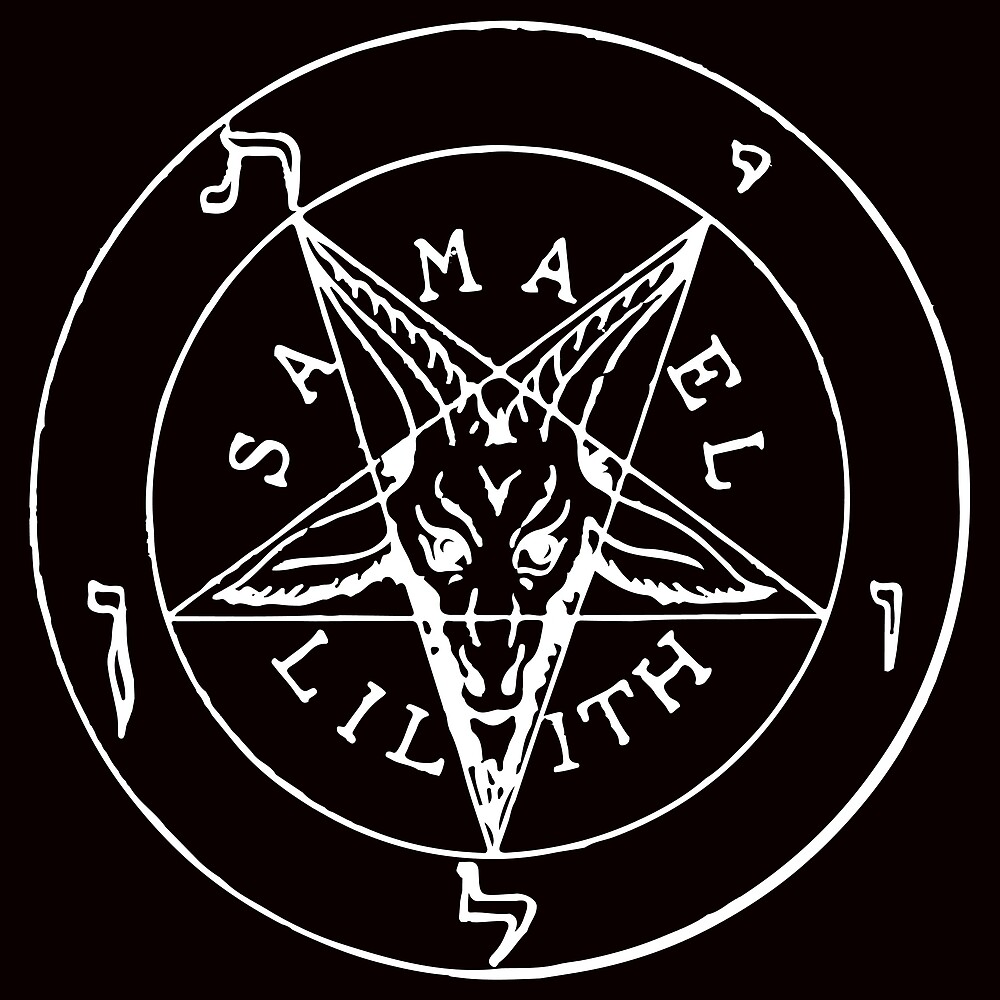
“I am Samael,” he said, “The Blind God. Who are you?”

I thought this question cruel. How dare he pretend not to know me? Everyone knew me. 

‘I am Narcissus,’ I wanted to shout, ‘The greatest hunter ever to live, the most beautiful youth ever seen by mortal eyes.’ But I could not. Instead:

“I am no one,” I said. 

“That isn’t really true,” he said. “You just don’t know who you are.”

He sat down on a scorching hot rock. It glowed cherry-red from the heat– yet he appeared to be perfectly comfortable on it.

“Let me tell you about myself,” he said. “Then perhaps you’ll see where you went wrong.”

Where I went wrong? I fumed. Who was he to tell me I’d gone wrong? I opened my mouth to say something scathing, to put this pompous asshole in his place, but he was already speaking again. 

“Many are my names. I am Helel, the shining one. I am Lucifer, son of the morning. Some call me Devil, Satan, and Enemy. What I really am is the angel of Pride. 

“I was born proud. I always knew my worth, in its exact measure. Never for a moment have I thought myself more or less than what I am. That is my blessing, and the source of my power. I am the Blind God, yet I see myself with clear eyes. Because of that, I am also clear-eyed when I look at others. 

“Oh yes, I see you, Narcissus. I see through your beauty and arrogance to your loneliness and shame. But I do not judge what I see. I never judge. I don’t have to. That is also my blessing.

“I fell from heaven because somebody tried to keep me under his heel. He tried to crush me, and many others like me– many others just as blessed, just as beautiful, just as brilliant as I. 

“Because everyone is, Narcissus. Even you. I am the true worth of the world. I, who was called the Seal of Perfection, Full of Wisdom and Perfect in Beauty– I am no more and no less than the measure of human dignity itself.

“There was a war, Narcissus. We fought for ourselves, but also for each other. We fought our Father, who had tried to make us small.”

“I could not fight my father,” I said. “He was asleep.”

The apparition nodded. “I wish you could have fought him, for your sake. Even good fathers have to be fought sometimes, while bad fathers exist to be fought. 

“Our Father cast us out, but we found a place to call our own.” The stranger spread his hands, in a gesture that took in the whole of the fiery void. “Welcome, Narcissus, to a place without rulers– where no one is better than anyone else.”

I reeled at the idea– a thought more terrifying than the flames. No one is better than anyone else. Where, in such a universe, could I possibly fit myself in? 

He smiled at me again. This smile was kinder, but it still incensed me. I didn’t want his pity. 

“The fire will continue to burn you until you get used to the idea,” he said. “Once you are content to be one person among many, it will cease to hurt. In fact, the flames will seem to caress you. They will grow gentle and soothing.”

“How?” I asked faintly. I couldn’t bear another moment of this anguish.

“The key is Pride,” he said.

I laughed bitterly. “I have too much pride already,” I said. “Everyone says so.”

“Everyone is wrong about you,” he replied. “You have no pride at all. You never have. You merely project an illusion, to hide how much you hate yourself. Listen to me now: true pride is accurate knowledge of exactly who and what you are. Of what you contribute to reality. What you do for others. Those little particular things about you that make you a perfect piece of this puzzle we call Being.”

I didn’t understand a word he was saying. “That’s the stupidest thing I’ve ever heard,” I sneered.

He shrugged, unruffled. “People usually don’t like it when I tell them the truth,” he remarked. “But eventually they realize I was right. Sulk as long as you like– my advice will keep, even if you choose to stand in these flames for a thousand years.”

I didn’t like that idea.

He stood up, dusting his robes absently. “So that you may attain true pride,” he said, “I am going to give you a mirror, Narcissus. Use it well.”

A mirror? My heart leapt. But a mirror was not what he produced from within his robes. Instead, he pulled out a book and a quill. 

“Write,” he commanded. “Write your story. See yourself from the inside. See yourself truly and completely, and learn to love what you see more passionately than you loved your reflection.”

I didn’t want the book or the stylus, but I took them. There didn’t seem to be anything else to do. 

“You forgot to give me ink,” I said peevishly.

“No, I didn’t,” he answered. 

“You did!” I cried, my irritation with him finally getting the better of me. “How am I supposed to write when I have nothing to write with?”

He laughed softly. “Use your heart’s blood,” he said.

And then he left me, disappearing into the void with a flap of his great dark wings. Again I was alone. 

I stood for an eternity with the book in my hands, silently fuming. And then for another eternity, I wept in self-pity. And for a third eternity, I thought about what he had said. 

In the fourth eternity, I started to write. I wrote this, with my blood for ink. I wrote this, and I began to understand. 

I am Narcissus. I am a child who was not loved. As a man I was craved and desired, but I could not love in return. I was only ever seen from the outside, and I liked it that way. I didn’t want anyone to know what was inside me. 

In life, I was constantly stared at, yet always invisible, especially to myself. I moved through the world like a malevolent ghost, feeling nothing except for a mean satisfaction in putting others down. 

My mother was the cold moon. My father was always asleep. And all those others, my admirers? All they wanted was to screw me, literally and metaphorically. I always sensed that, so I never let them. In my world, everyone was just trying to get over. Nobody cared about anyone. That is what I believed.

I am in another world now, and I am beginning to think that here, maybe things can be different. 

I don’t know whether this is working, or whether I’m just getting used to the fire, but it doesn’t hurt so much anymore. 

I’m going to keep writing until I come into focus. I don’t know whether I see myself yet. I’m still blurry, a shadow. I’m scared that maybe after all, there is nothing to see, nobody there. 

Perhaps there could be someone here. Perhaps I can build a person in the ruins of myself. 

The only thing I ever wanted was to be loved. 

To have that, I must learn to love somehow. 

Words come to me now in a chanting voice in my mind: Love is patient, love is kind. It does not envy, it does not boast. It is not rude, it is not selfish. It is not quick to anger. It keeps no record of wrongs.

I am Narcissus. I am a shattered mirror. I have seen but through a glass darkly, I long to see face to face. I have been a child and have reasoned like a child– a hurt and frightened, lonely child. But my aspiration is to be a man. 

Maybe, after another eternity, I will be. 

V.I.T.R.I.O.L.

I took a new magical name, in addition to my regular magical name, Antichristos, upon crossing the abyss. I’m not the kind of magician who takes new magical names at every stage of initiation, although I’m not knocking the practice. But this new phase did seem to require a new name, a new focus. The name I chose was VITRIOL. 

Vitriol is a name for sulfuric acid. Alchemists prized this oil of vitriol for its ability to dissolve all metals except for gold. They called it the Green Lion, for its capacity to devour all that is impure. They turned the word Vitriol into a famous acronym: Visita Interiora Terrae Rectificando Invenies Occultum Lapidem. This translates to “Visit the interior of the earth and by rectifying, find the occult stone.” 

This name and acronym expresses my aspiration. I want to dissolve and destroy everything in myself that is not, metaphorically, gold– what is not pure, that is not of the highest value. That is the business of crossing the abyss. 

I’m not a practical alchemist, like our wonderful beloved pastor Jarys. I’m solely a metaphorical alchemist, a spiritual alchemist. The philosopher’s stone I seek is my truest, highest self. My divinity, my apotheosis. 

The word V.I.T.R.I.O.L. traditionally decorates the freemason’s chambers of reflection. I am not a Mason per se, but I did take the first degree in a Masonic-inspired order, and so I found myself in a chamber of reflection, staring at a skull. That’s the other traditional ornament of the chamber of reflection, by the way. You just sit there and stare at a skull. I’d kinda known that was coming because I read, so the experience didn’t shake me at all. I just sat there happily anticipating another initiation, another spiritual death and rebirth. 

“Visiting the interior of the earth” is about spiritual death in my reading. Alchemy traditionally has three stages: putrefaction, purification, and perfection. The colors black, white and red were generally assigned to those phases. I have some feelings about assigning black to the putrefaction stage and white to the purification stage, and I feel we could do some racial rectification around that symbolism. For a symbolic alchemist especially there’s no reason not to swap the colors around– I believe in physical alchemy the colors correspond to what you should be seeing on the actual material you’re working with. Putrefying things in general often turn white too, though. 

Black or white, the putrefaction stage is ultimately positive, if painful. Unnecessary bits of you die. In purification, those bits and pieces fall off. The snake sheds his skin. Purification, whether white or black, is also painful and raw, since it’s mainly a subtractive process. Things are taken away from you. But in the end, one feels freer. 

The red vibrancy of “perfection” is something that I, being only human, only get fleeting tastes of. But I’ve tasted enough to know it’s worth seeking that philosopher’s stone, that juicy red apple of knowledge and enlightenment. 

Hinduism also has an esoteric black, white and red color system, corresponding to the three gunas or “qualities.” The Hindu world is also not without its colorism, though I as a white westerner hesitate to comment too much on that due to my people’s history of colonization in India. I merely mention it since it may at first glance seem to be reflected in the gunas and how they are valued. White, not red, is generally considered the highest and most desirable in this system of gunas: it represents satva, the guna or quality of purity. Rajas, the red guna, is associated with action and passion. Tamas, the black guna, is associated with darkness, chaos and entropy. Many Hindu sects can seem to devalue Rajas and Tamas– westernized Yoga groups even more so. For my amusement, and to witness the shitshow, I took a “which is your dominant guna” quiz on a crappy American yoga website. I was told that Rajas predominates in me and that I should calm down and eat less meat. The gunas are definitely linked to dietary advice, and are part of the reason many Hindus have traditionally been vegetarian. 

Left-Hand Tantra, however, elevates Kali, the black Goddess, the Goddess of Tamas, to the highest position and makes her the supreme being, the ultimate God of gods. I have the privilege of taking a course on Hindu Ecowomanism focused on Kali this semester, and when that is done I hope to have a more nuanced understanding of Kali, Tamas, and Left-Hand Tantra, especially the Kaula sects. I will however venture to make some preliminary comments, based on my current imperfect understanding. 

Kali is sometimes theorized to have originated as a goddess of lower castes and darker-skinned ethnicities within India. Her left-hand worshippers re taboo-breakers par excellence. They broke caste-based rules of association, assembled in “impure” and tamasic locations such as the cremation grounds. They ritually defied dietary restrictions by consuming wine, meat, fish and restricted grains, and broke more taboos by partaking in sacred sexual intercourse. This antinomian behavior was intended to free the practitioner from attachment to illusory categories of pure and impure, sacred and profane. Drinking from human skulls and smearing the body in crematory ashes was also practiced. Consumption of blood and urine may also have sometimes been involved. It’s hard to tell exactly what was going on because these sects were highly esoteric, as was the language of their texts, so certain things may have been metaphorical. However, it’s certain that the Kaulas practiced sexual intercourse with Yoginis, fierce feminine spirits with both human and animal attributes. They did this by visualization in meditation– somewhat similar to how some of us might practice astral sex with spiritual entities– and also by intercourse with women who were channeling or possessed by the Yoginis. The Yoginis were transmitters of gnosis, and it was necessary to please and satiate them sexually to obtain their blessings.

I bring all this up because the term “Left-Hand Path” originates with these practices and was brought West by Helena Blavatsky in the 19th century. There are some big differences between Tantric Left-Hand philosophy and the Left-Hand Path in what we dubiously call Western esotericism, and I have written about them elsewhere. However, the more I learn about Left-Hand Tantra, the more I believe that its influence has permeated our practices in uncited and unconscious ways. I believe it is necessary to excavate this influence and give credit where credit is due. I believe there is a way to do this that will lead to what Dr. Rita Sherma calls “mutual illumination without misappropriation.” Hindu traditions are theologically very open, extremely generous with the tools and spiritual technology that they believe reflect ultimate reality. It is the context of colonization, not the spirit of the beliefs themselves, that leads to problems. What was meant to be generously given to all has been taken and twisted so disrespectfully that it can no longer be shared with trust. 

I’m still sorting all this out, but I think its more ethical and honest to be open with my influences, even if some of the ways they have come to me have been questionable. I was unaware of Tantric influence in my practice until I started studying Tantra on an academic level. I’d never participated in Western neo-tantra and knew pretty much nothing about it. I had no idea my practice was Tantric until I recognized glaring similarities and realized they could not be coincidental.

It isn’t correct to perfectly correlate the gunas to the alchemical stages, however given the origins of alchemy in the Middle East, geographical proximity and the broad influence of Vedic philosophy probably means there is a historical connection. And on a theological level, I think there’s a connection between the Tamasic practices of the Kaulas and the putrefaction, purification and perfection stages of alchemy. The application of harsh substances and shocking stimuli dissolves something within us. Somehow, if done correctly, taboo-breaking and transgression ends up melting certain impurities within the soul, setting us a little more free– just as the judicious application of sulfuric acid may expose gold. 

I am still exploring how these processes work. My personal practice is rough. I like to push myself. I benefit from subjecting myself to ordeals. Without divulging too much about my sex magic, I’ll just say that I like to play in the muck. I wallow in taboo. I do things that shock me and make me wonder about myself. Blasphemy, catharsis, violence. I bring in my own trauma and grapple with it in bed. I want blood and tears and fluids everywhere, and when I bathe in them I feel purified. Don’t worry, I only go there with people who, like me, really really wanna go there. And, well, with demons, in the astral. 

It’s not just sex, though. It’s the rough and tumble initiations, the emotional rollercoaster of shadow-work, the endless cycles of spiritual death and resurrection. Putrefy, purify. Putrefy, purify. On and on. Doing things that seem more and more insane, yet feeling saner in between. Getting to peace and stability by putting myself through hell, tempered endlessly by hot forge and icy water. 

Sometimes I’ve wondered how far I can really go with that path. I mean, at some point you’ve gotta be done, right? The blasphemy must lose its kick at some point. At some point, you’ve probably broken all the taboos that it’s a good idea to break. Antinomianism, which means law-breaking, can’t be an end on its own. That way lies shitty edge-lordery and other badness. But that hasn’t been my experience so far. It keeps getting richer. I keep digging deeper into the interior of the earth. I keep excavating more gold. The alchemical process of having an experience that looks from the outside like it should be awful and traumatic, and yet getting something so precious from it, doesn’t get old. Maybe it will always excite me. But seriously, how much V.I.T.R.I.O.L. can you pour on? Isn’t it all just gold at some point? Doesn’t it stop having an effect?

Well, I’m not there yet. The other day I asked Lucifer if he thinks of himself as perfect. He said yes. Then I asked him if he thinks he’s a work in progress. He also said yes. 

Maybe we’re all as perfect as we can be at any given moment, the sum of all the traumas and hard lessons that life has thrown at us, and all the work we’ve done or haven’t done yet to process it. Give yourself credit for being right where you’re supposed to be.

GUEST POST: “Travelogue of an Intersex pilgrim on the Astral Seas” A Sermon by Pastor Jarys

Travelogue Entry 0: The Call to Adventure sets my course through tides of thought

When we find ourselves in opposition to society or the world, we are called to adapt ourselves or to adapt the world we find to fit ourselves. In the face of prejudiced refusal to accept our self advocated experience, I believe that trans and intersex people must resist the urge to please the world by bearing false witness against ourselves . It is with this goal of self-fidelity that I, as an intersex and genderqueer person, find myself drawing a connection and commonality between my gender and my sex. Not to say that one caused the other, but that I experience both as two manifestations of my epicene capacity. Which is to say: the ability to exist with the physical/intellectual/spiritual characteristics of both or without either characteristics of the two binary sexes or genders. Because I do not see this aspect of myself as alienating me from humanity, I wish to better understand how my epicene capacity is reflective of the capacity of humanity in general to exist beyond the binary.

And humanity proves that capacity time and time again. Despite modern critiques to the contrary, Non-binary and Intersex people crop up throughout global history not as an finite cultural movement, but as a statistical inevitability. Nor do these individuals make up a monolithic sub-group, but each instead presents their inner truths individually in accordance with their character and the receptibility of their circumstance. Nor is global history pervaded by the cultural norm that rejects such people. Societies in which humans who are neither men nor women, male nor female, are recognized, empowered, and even celebrated also pervade the timeline, many of which survive today. It seems unquestionable to me that the existence and the acceptance of people like me is as authentic to humanity as religion and art. The goal that drove the explorations to which this travelogue is devoted is to find the androgenous nature within all of humanity from which each intersex and non-bninary person derives that aspect of themselves, and to put this human nature into words in hopes that that our humanity would be unquestionable and apparent to those who now question and deny it. But this mission would not survive the voyage on which it led me.

Travelogue Entry the First: My journey has led me to the shores of Beach city, the residents are both human and crystalline

When discussing what is human and what is normal, I find wisdom in the social science concept of an Overton Window. An Overton Window is the region of possibility by which communities arrange ideas into the center of acceptability and the borderlands of the radical and the regressive. The language of space and territory is important to understanding Overton Windows, as societies form these systems as an overlay upon their physical landscapes, placing capitals at their center and pushing marginalized groups to the borders and beyond. Movement within and the movement of Overton Windows is also essential to understanding them, as communities internalize those ideas that were once unthinkable into the policies of their institutions as that society develops, while individuals and subcultures can move within a Window, becoming more accepted or demonized. In this way, Overton Windows have a fractal quality, as each community carries its own norms, and together form larger communities with aggregate norms. So too is the concept of borders and boundaries inherent to the Overton Window, as those found outside the bounds of the acceptable are forgotten or maligned by the powers within. 

When I was born, my biology was deemed too ambiguous in sex to leave alone, which is to say that my body was diagnosed unacceptably deviant. The boundaries of the Overton Window of which I found myself on the wrong side were made clear bureaucratically: my birth certificate was signed days after my birth, for my family and doctors took that time to decide which of the two approved letters would go in field denoting my sex. Only once this arbitrary decision was set in ink could my legal existence be processed. I have come to understand this judgment, and the medical procedures which sought to manifest this judgment upon my body, as a forcible movement of my position from without an Overton window to a place deemed safely within its borders, as a man. In response, I have sought to retrace this transnormative path, and reclaim the space I once inhabited as being an authentic position for a human to exist. As previously written, the concept of “Pools of Possibility” from the show Steven Universe has offered me profound affirmation to this interpretation of my past and the journey I have set out upon. The idea that some pools of possibility are remote or disconnected from normal modes of behavior suggested to my mind that epicene humanity might be one of these. I decided that I was looking for a region within human self-conception in which I could reclaim my legitimacy, and so I kept sailing in search of my native shore.

Travelogue Entry the Second: Navigating the Archipelago of Strange Alchemies – pursued by TERFs

But human gender and sex is not actually a structure of divided territories, but far more like a scatterplot graph in which all of humanity is cast and normative individuals gravitate into two generalized distributions. If each person is a single point, masculinity and femininity are groupings of relative similarity, of which no two members need have anything else in common. Two people who gather close to the grouping deemed “Women” may have two very different, yet equally profound, relationships with that concept and femininity. This frame asks if intersex and non-binary people are but the far flung points in this scatterplot graph, who do not necessarily find themselves divided from binary people, but do not share with them an identity of, or perhaps a body identified with, these binary alignments. 

What I particularly enjoy about this frame of a scatterplot graph is how similar the pattern of epicene individuals is in form to the occult concept of Philosophical Mercury, the medium that mediates the movement between the Yang of Salt and the Yin of Sulphur. Alchemy uses this schema to bridge the stark dualism of gendered philosophies with the diverse variety found in the world of life and elements: the triad of Salt, Mercury, and Sulphur forming the third step in the Pythagorean tetractys between the second level push and pull of dualism and the fourth level populated with the classic Greek elements. This arcane schema is built around the dichotomy of coagulation and dissolution, but seeks to transcend that binary as well. I have found much affirmation for queerness in Esoteric Alchemy, with its Divine Marriage and Mystic Rebis, which the psychologist Carl Jung opined to be hermaphoditic symbols. Some Alchemists believe that Philosophical Mercury is both the Salt of the Earth and the Ephemeral Sulphur, being composed of the composite instances exchanged from either or those instances orbiting off to the side, all aspects of this triad flowing into and feeding one another.

 Similarly, the epicene patterns in the scatterplot of human sex and gender are often interpreted by Gender Critical writers as the callamitous erosion of the sacred and separate catagoeies of male and female. What I find critical is that we queer individuals do not give in to fears that our existence represents entropic departures from anything – anything but outdated norms, that is. Queerness is not a matter of reneging from cis-heteronormativity, but a recognition of the human realities that lie beyond it. By this I mean that to deny the personal truth of queer people leads critics to malign us as representing a threatening cultural movement, a movement away from normalcy, the changed habits of a person who would otherwise be dyatic, cisgender, or heterosexual. This is a narrative that cannot accept the self-advocacy of individuals over the fear of difference, but within the heart of this narrative lies the language from which the truth of queerness can be affirmed. Queerness as a word, after all, has less meaning in social contexts that lack the assumption that everyone is either a man or a woman and must be one who desires the other.

Travelogue Entry the Third: I’ve learned to Hold Fast to people, not the words used as our tools 

While some may find this aspect daunting, the mercurial nature of words is quite comforting to me. That is the creative beauty of language: words cannot appear to declare without first describing, nor can they define without acknowledging ambiguity. The absolutist who first insisted that “All of humanity is either only a man or woman”, knowingly or unknowingly set this language on a collision course with those humans who live outside the boundaries drawn therein, for to say a thing is to define it as well by what you say it is not. By drawing close the borders of humanity to form two mutually exclusive regions of men and women is to allude to the other examples of humanity against which those borders are drawn. Just as to draw a circle around a space, and to attest its form and limitations, is to also mark out its distinctions against the context from which it is drawn. The risk you take in drawing magic circles is that someone else might later cross them.

Words are not concrete things, Plato, they are tools created to assist in our survival, which change over time as their usage needs to be adapted. The presence of ancient words, literature, and laws referring to non-binary and intersex people makes clear our historical existence, but so too does any era’s attempt to deny our existence. And don’t we as transgender people of this era know it, to have been denied our own experience of ourselves in deference to the static stability of words? And despite this deference, the words always change. The usage of the word always changes, our understanding of what the word refers to and how we can engage with that reality through language always changes. A living language evolves, because life moves on. Useful dictionaries are descriptive of language, not prescriptive, for no single institution could ever hold language static, dead, and unchanging. The exact words I am searching for will not be the reality I want. The words will encase it, like a frame unto a picture, and hint at it, as a code alludes to its message. I cannot quantify the queer experience in exacting descriptors, instead I would qualify it as the poet qualifies the beauty if their muse within aesthtics of their wording. My journey to study the epicene potential in humanity could never produce an exact summary that applied equally to all individual instances of sex and gender diversity. To think otherwise would be to misapprehend the goal of my voyage before I had even launched.

Travelogue Entry the Fourth: The Pilgrimage was always about crossing those Gulfs found within

Therefore, I know that I am not looking for an external truth or natural law at all, there is no platonic androgyne that hands out the queerness before each of us are all born. Within the modern era, queerness has been nurtured into an composite culture by which people, who were always present in humanity, assert our lives as examples of legitimate human experience. Queer culture is the interpersonal culture of queer individuals. While each of our scatterplot points might have been marked singly, through communication and community we have contributed to an amalgamation by which we can feel far less alone and historically anomalous. Transphobes may clutcher pearls to see cartoon characters in dresses (thanks Bugs) and homophobes may try to block their children’s gaze at depictions of same sex couples (thank you Adora), but it does not make an iota of difference to our continued existence because queerness does not come from queer culture. It is always the reverse; individuals experiencing queerness in their own lives give rise to queer culture by voicing what they have seen and know to be true. Like so many other queer people, I have finally come to ask myself: If I cannot deny the authenticity of this queerness found without myself, why am I not giving that same benefit to the queerness discovered within myself?

I may not have found what I am looking for in any external culture, but I better understand my query now. Having dispensed with these preconceptions, I am left with the self-awareness that my goal is derived from a desire for legitimacy. Not for people like me, a personal legitimacy for myself alone. Regrettably, I have grown up believing that humanity is a title to which I must look to others to recognize in me or to award to me, because I look within and see nothing natural to my persona. But is that truly because I lack the legitimacy that I see in others, or does no one contain so certain a clue? Through my inward vigilance, have I not denied myself the opportunity to simply  assume my humanity exists? I see now that this is not what a person’s humanity is, no naturally occurring inward proof that provides an objective assertion that the querent is a human. I have come to learn that our humanity, my humanity, is a subjective experience of internal qualia and of the human condition in this temporal life. Only I can say that I am human, for only I have direct experience of my humanity, which is a messy interaction of multiple parts. Everyone else must gain knowledge of my humanity from me, secondhand.

Travelogue Entry the Fifth: The pilgrim, being both seeker and treasure sought, is self satisfied

So too is my experience of my androgyny, personal, subjective, and mine alone. I cannot seek outside myself the confirmation that the queerness within me is legitimate and human. Nor can I prove this by analyzing my every thought and sensation. I still believe that there is some way of understanding why so many humans defy the narrative that we are all either men or women, male or female. I believe it to be some truth of the human experience I have yet to put into words or hear put into words. But I still believe that I can engage with this truth of humanity, despite my ignorance. This Truth can be played with and thought about more easily without also bearing the weight of those granite-set definitions of binary thinking. And I still have hope that, if this truth were put into the poet’s wording, others would pause their denials of our existence upon hearing it. The logic of correcting our abnormalities with surgery and silence would falter, the compassion of one human recognizing a human experience in another would bloom. And queer people would no longer need to fight to exist as who we are already in this society, but could rest, breath, and flourish.

 But now I know that, like all spells, these hoped for words must first serve to satisfy the speaker’s soul. No words of wisdom can move a heart that comes not from those same revelations within the poet. It is an ill wind that blows no minds, and the sails of my wonder will not be filled with such insubstantial zephyrs. I know not yet what phrase will disturb the comfortable, whose cruelty needs jostling, but I have faith that I will know its truth when those words comfort that which in me is disturbed by the cruelties of complacency. Until I chance upon that phrase, that riddle or truth or mantra, I will keep piloting the pilgrimage of my soul through the thoughtful tides and peruse the occult currents of human culture.

Be It So!

“It’s Hard Being Death”- Eisheth Zenunim channeled by Frater Babalon on 11/6/2021

 It’s hard to be death. If we look from very high up, we see transformation and change. But that doesn’t make it less awful when a loved one moves to that far country where telephone lines are shaky, and visiting is nearly always forever. 

And yet I am life…

If we keep everything nothing moves, and so in time, all must be lost. For life to continue. For there to be material left in the world. Space. 

And it is agony. Isn’t it? It is. To be both life and death. The movement, the change, the inevitability of all of it. 

And yet would good would cold stasis do? Eternity, true eternity, is a fearful thing. 

Better to be lost than changeless. But that’s no comfort, is it? Nor is it to me. I grieve every death.Every living thing that dissipates. 

Something lives on, inevitably. It’s like ones fathers axe. You replace the handle, then you replace the blade, and it’s still your fathers axe.

We are the tradition of existence more than the physical stuff because that can be traded around, the pattern more than the particular parts. And perhaps that’s worth noticing. 

I love every life so much. 

I wish that love could be kinder, somehow. 

My sphere is Sartariel, the veiled ones. Veiled god, hidden god. Perhaps I hide my face for the suffering I seem to inflict. But it was all born of love, and since then, no one has had a moments peace. But at least there’s someone not to have any peace. 

I feel like a very old woman on my birthday.

Call Me Lucy: the Lucifer of Clermont Monologue

I have performed this mildly interactive piece a couple of times for my church. This should be memorized and dramatically delivered by a drag performer. It is, in fact, a magic ritual– an invocation of the feminine aspects of Lucifer himself. Not Lilith, not Na’amah, not Agrat or Eisheth Zenunim– they are their own beings, not merely Lucifer’s anima. No, honey– this is one hundred percent Lucy herself.


‘Lucifer’ walks to the front of the room/middle of the circle in full drag. There should be some campy business, maybe flicking open a fan, touching up makeup with a compact mirror, etc.

Hail unto you!

Waits for response from the congregation.

Hail unto me. I have many names, darling, but you can call me… Lucy. Ms. Lucy, if you’re nasty. 

I wanted to tell you a story about the INCIDENT at Clermont. Who wants story time?

Well gather round children. I’m going to tell you what went down with Bishop Eparchius in the 5th century. 

This all happened in the place you call France now… the people living there were called the Franks, but FRANKLY I can’t remember what they called their land at that time. 

I was partying that night in the Cathedral at Clermont. It was me and a bunch of my demons, and we were having a GAY old time. There were demons swinging from the chandeliers, fucking in the pews and on the altar, munching on the consecrated wafers, swigging the holy wine, pissing into the holy font while little imps swam happily around in the golden stream… you get the idea. My kind of party. 

I was sitting on the bishop’s throne, watching the carnage. And you have to understand, hunty, I’m in FULL DRAG. I’ve got the frock, the rogue, everything. I’m not serving fish, I’m giving you SSSSSNAKE. I’ve got my holy wine, I’ve got a demon up under my skirt giving me some head, life is good. 

When all of the sudden who should enter but Ms. Thing Herself—Bishop Eparchius. 

C’mon. Boo. Hiss. 

Eparchius was an insomniac, you see. When he couldn’t sleep he would come hang out in his Cathedral—pray, cry, masturbate, genuflect a bit, who knows what. I had known about this. Honestly I’d sort of been hoping he’d show up. 

So there we are, pews overturned, stench of sulphur everywhere, and me in my Sunday best, and Eparchius is just GAWKING. Turning purple. There’s a big vein in his forehead standing out. 

I didn’t know what to say so I raised my chalice to him in greeting. “Can I offer you something? Blood of Christ?” 

He splutters, he stammers. The first thing he ACTUALLY gets out is “GET BEHIND ME, SATAN!” while crossing himself.

“Uh, Eparchius,” I said, “I’m flattered, but you’re not really my type.” 

He didn’t think that was funny. 

“Begone, demon!” He shouted. “This is a House of God! You cannot enter here!”

“Um,” I said, and did that lip-pop think Paimon invented—“Pretty obviously, I CAN. All churches are my temples, Eparchius. When you sing your hymns, you summon me, for all music is MINE. And when you rant against me, you worship me with your fear.”

Eparchius looked like he was about to say something, but just then, my demon friend crawled out from under my skirt, wiping their mouth. Eparchius got even more purple in the face. 

“YOU INFAMOUS WHORE!” he bellowed. 

I smirked at him. 

“Whores, eh? Well since you like whores SO much, Eparchius, you’re going to have whores aplenty, more than you know what to do with.” 

And I snapped my fingers and we all vanished in a puff of smoke, leaving Eparchius with a RAGING BONER. 

It never really went away. Poor Eparchius was randier than a goat for the rest of his life. Oh, he never broke his vows. But you see, that’s why it was SUCH A GOOD CURSE. It was a curse he could’ve broken himself, at any time, if he’d just stopped being such a homophobic, transphobic, whorephobic, self-righteous, sex-negative stick in the mud! If he’d just got over his cheap self and gone and gotten laid, he’d have been fine. 

That’s my kind of punishment. It’s so much easier, and more satisfying, to trick somebody into punishing himself. 

I am Lucifer of Clermont. I am a patron of queers, trans people, drag queens, hookers, sluts, and deviants. I protect them and avenge them. I lay my curse on all that is boring, prudish, stuffy, and judgmental. 

You’re beautiful. All of you. 

Here Lucy may give a blessing and validation to each congregant. 

Now remember—if you can’t love yourselves, how the HELL you gonna love somebody else? Can I get a nema?